
Lotus Emeya Review
In some ways, you could argue that the electric car revolution was in part sparked by Lotus, because the very first Tesla Roadster was built on a Lotus chassis, directly adapting the iconic British sports car design into the world's first high-performance highway-legal electric vehicle. Now, nearly two decades later, Lotus has returned to perhaps claim what was always theirs? The Emeya is attempting not to be a footnote in someone else's story. It is a statement of intent from a brand that understands, perhaps better than any other, what a car is supposed to feel like; and has now applied that understanding to an entirely new kind of powertrain. Built on an 800V platform, motivated by dual permanent magnet motors producing 603 horsepower, and wrapped in bodywork shaped as much by aerodynamic necessity as by desire, does the Emeya arrive as Lotus catching up with the electric age, or something reminding everyone else who helped spark this 21st-century EV revolution?
Design
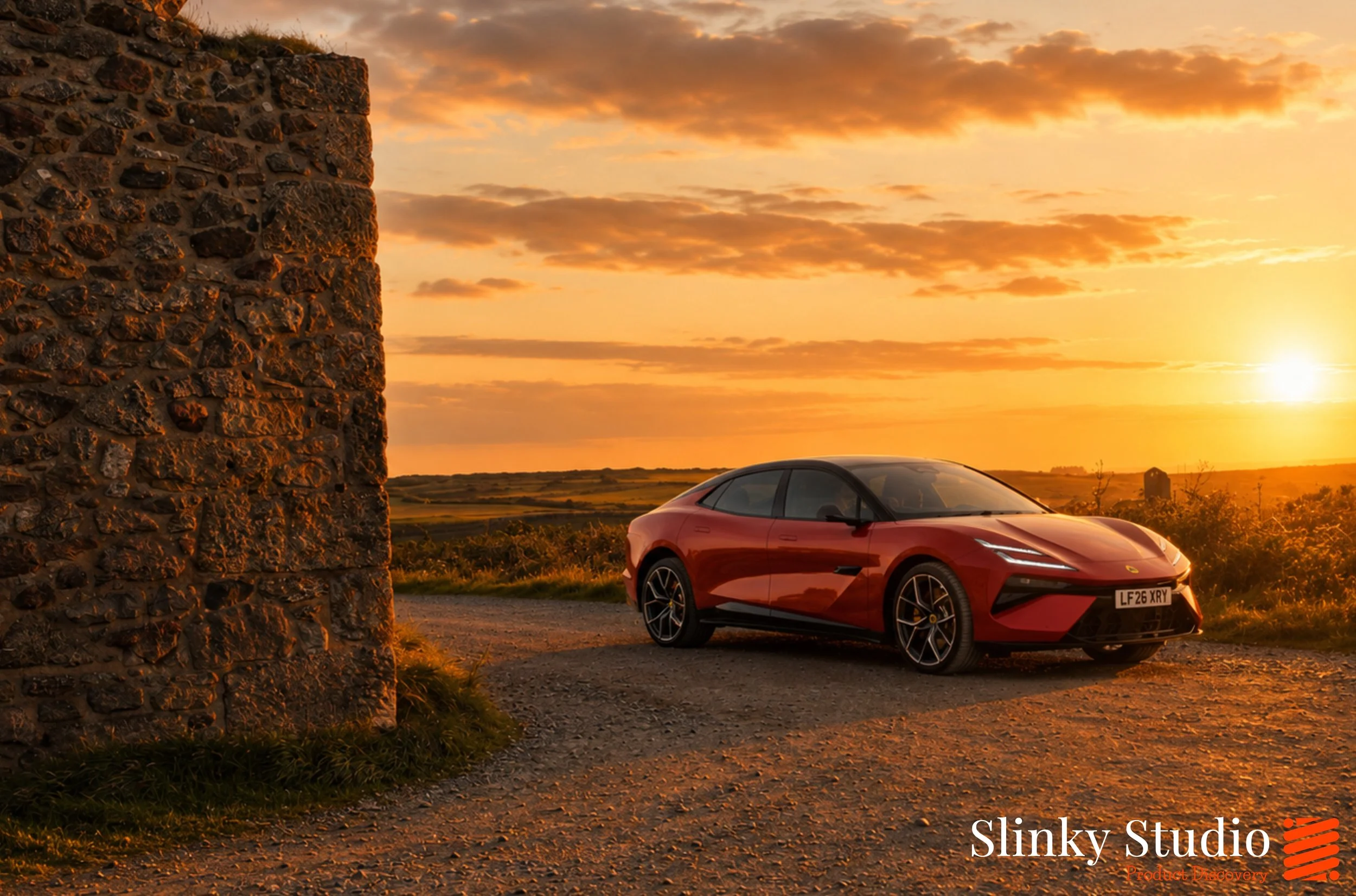
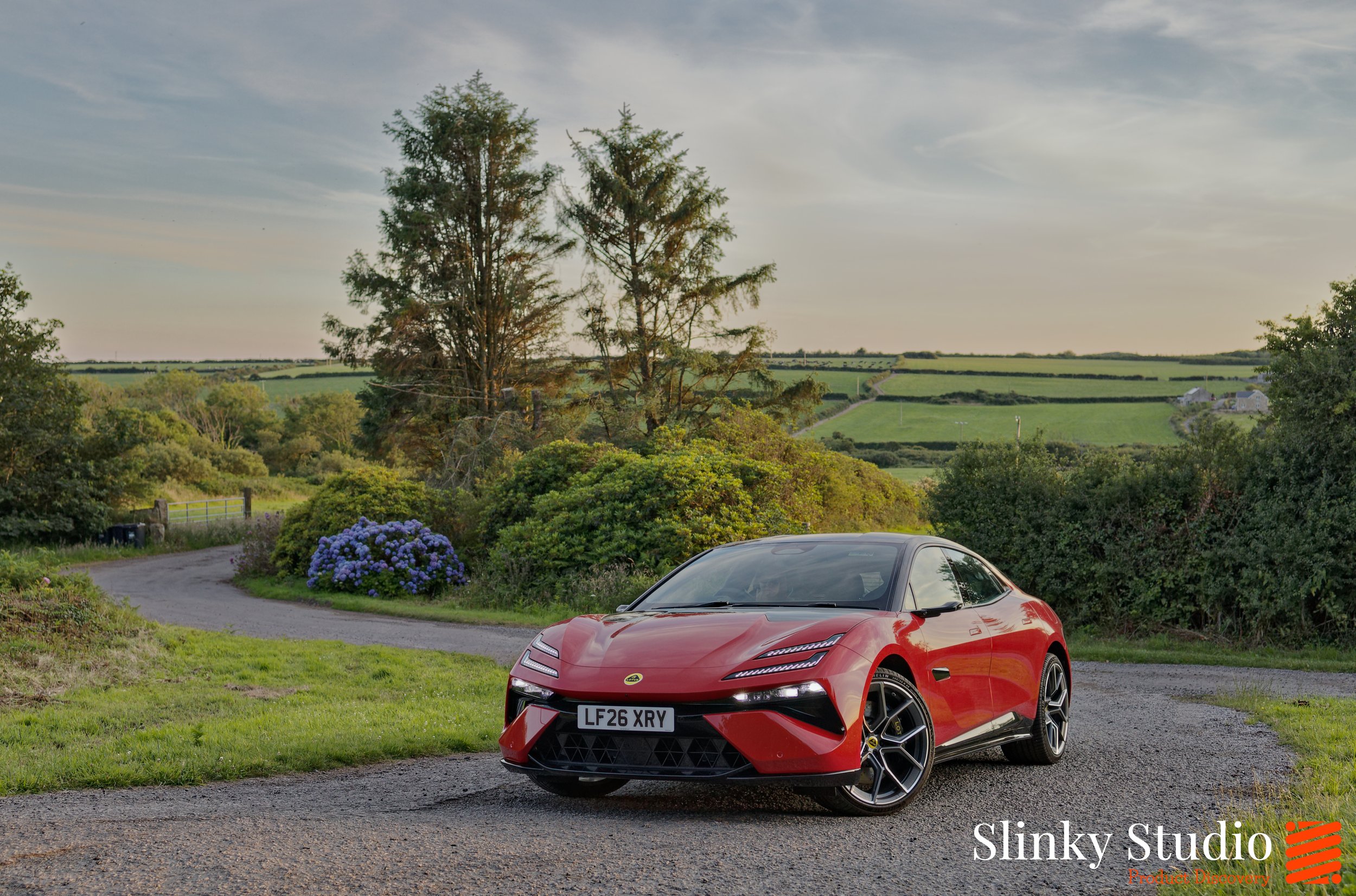
Viewed side-on, the Emeya is reminiscent of the sports car designs of the 1960s, with its long, flowing profile, cab-rearward proportions, and tightly sculpted glasshouse, creating a sense of movement even at a standstill. There’s a hint of classic Lotus DNA in the silhouette too, recalling cars such as the Lotus Elan, whose clean surfacing and restrained elegance prioritised proportion over aggression. While the Emeya is considerably larger and more dramatic in execution, the visual philosophy feels familiar: low, sleek, and shaped by the idea that speed should appear effortless rather than forced.
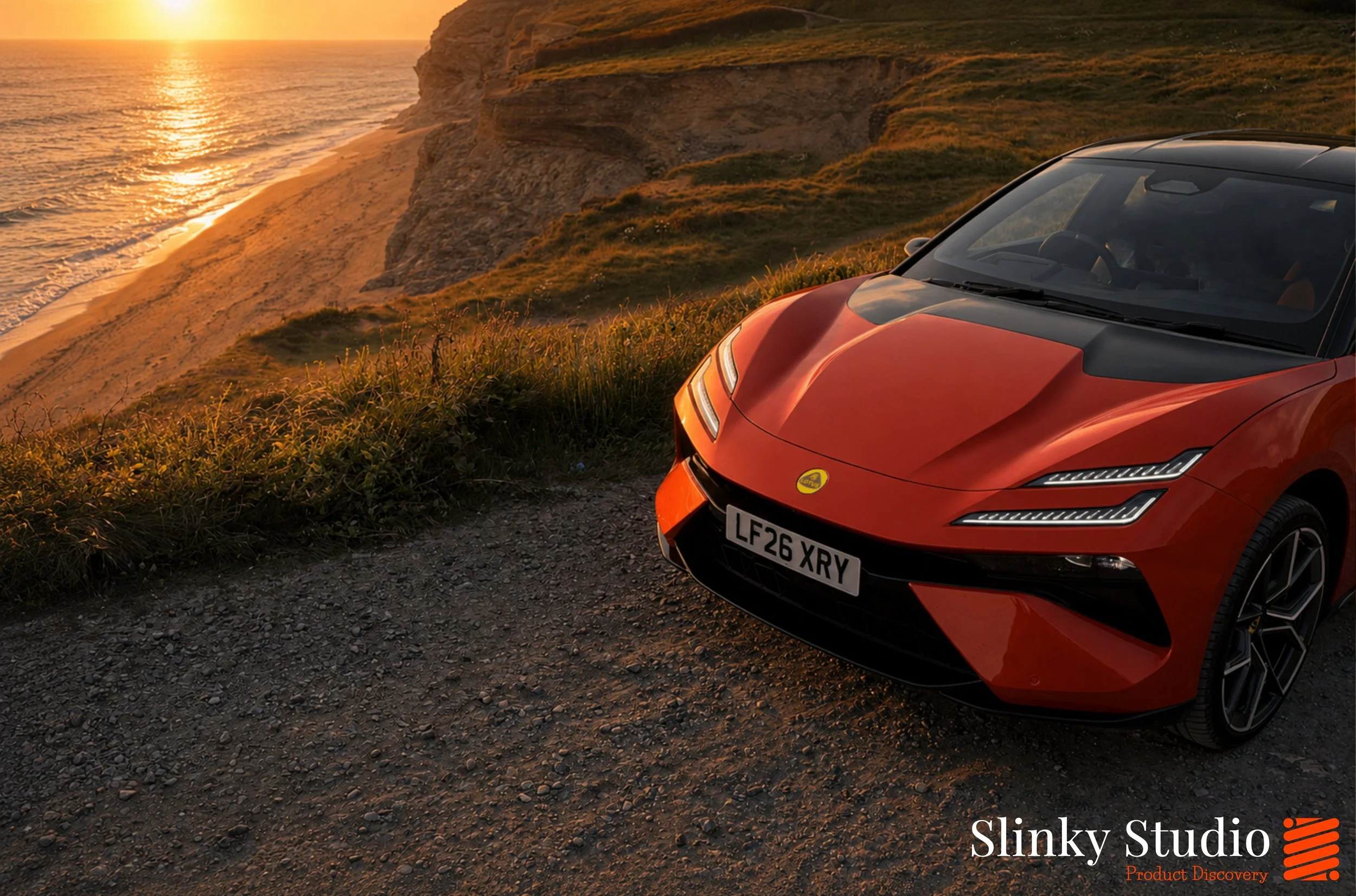
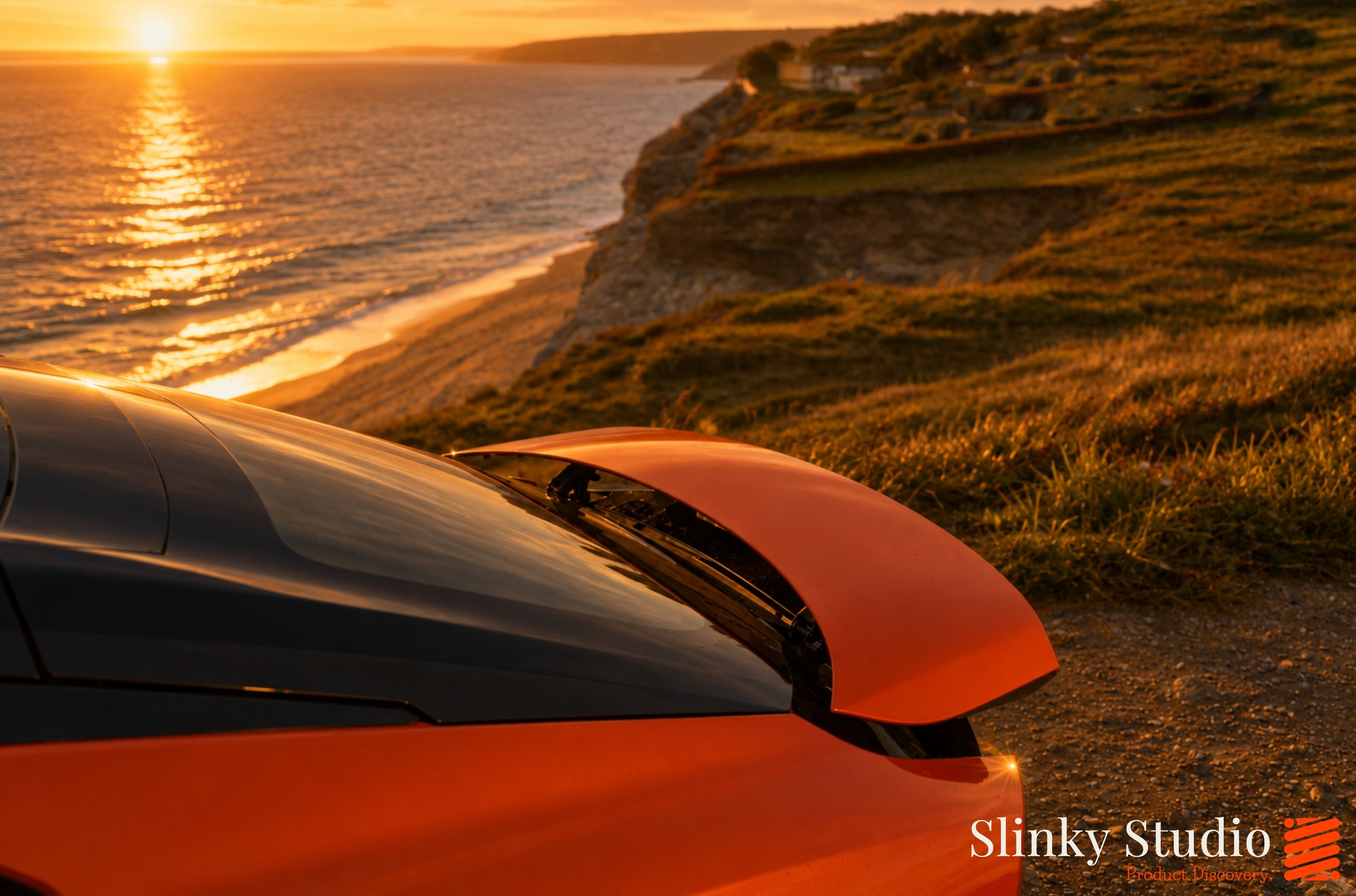
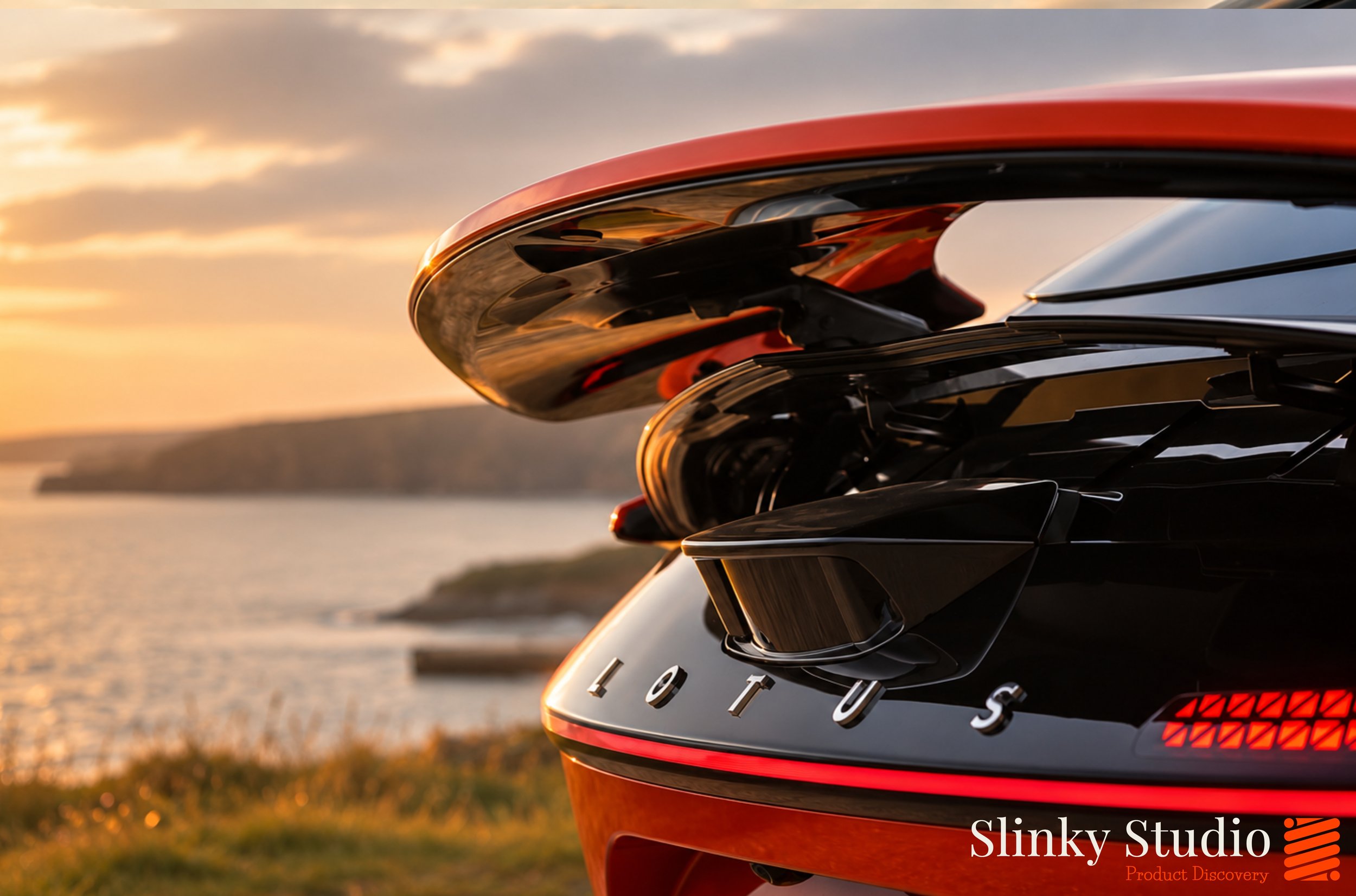
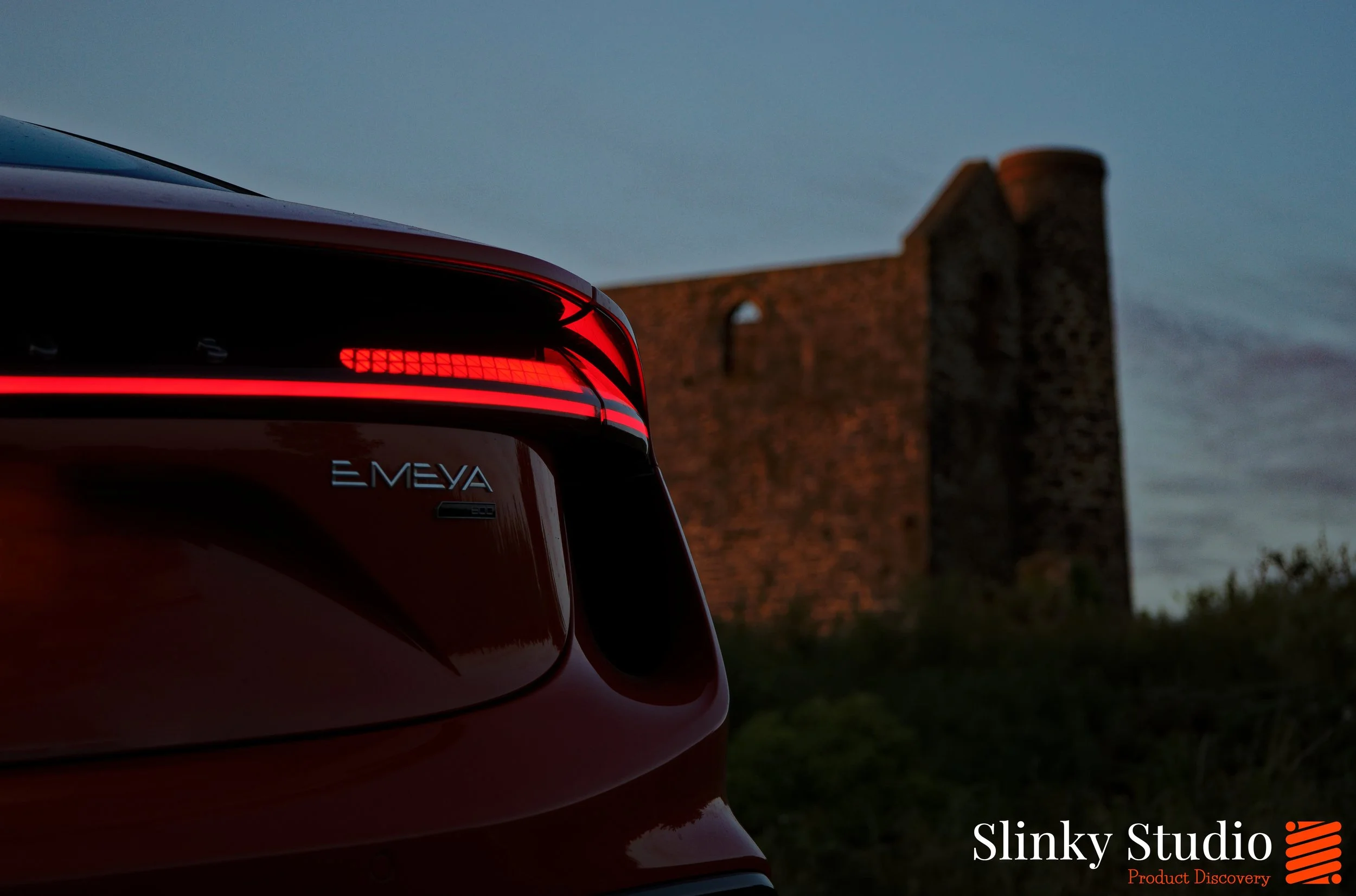
Lotus has many clever visual tricks here, but one is particularly interesting and that’s towards the front. By blending the black hood into the windscreen in one unbroken sweep, and contrasting it sharply against the body colour below, the design conjures the impression of a long, low bonnet, one that is, in truth, rather compact. The bonnet falls away steeply; a shape the old combustion cars could never afford. It's a dividend of electrification, and it looks more like a Lotus for it: nose down, pointed and ready. At the tail, a retractable spoiler deploys automatically when the occasion demands, rising cleanly from the boot-lid before retreating just as discreetly so as not to obstruct the clean line when parked. Adding to this, we see an idea borrowed directly from Formula 1; the Emeya runs an active air dam (ADD) beneath the front bumper that deploys at speed or in Sport mode, working in concert with the flat floor and active rear diffuser to generate genuine ground-effect downforce, up to 150kg of it at motorway speeds, before retracting on a cruise to preserve range.
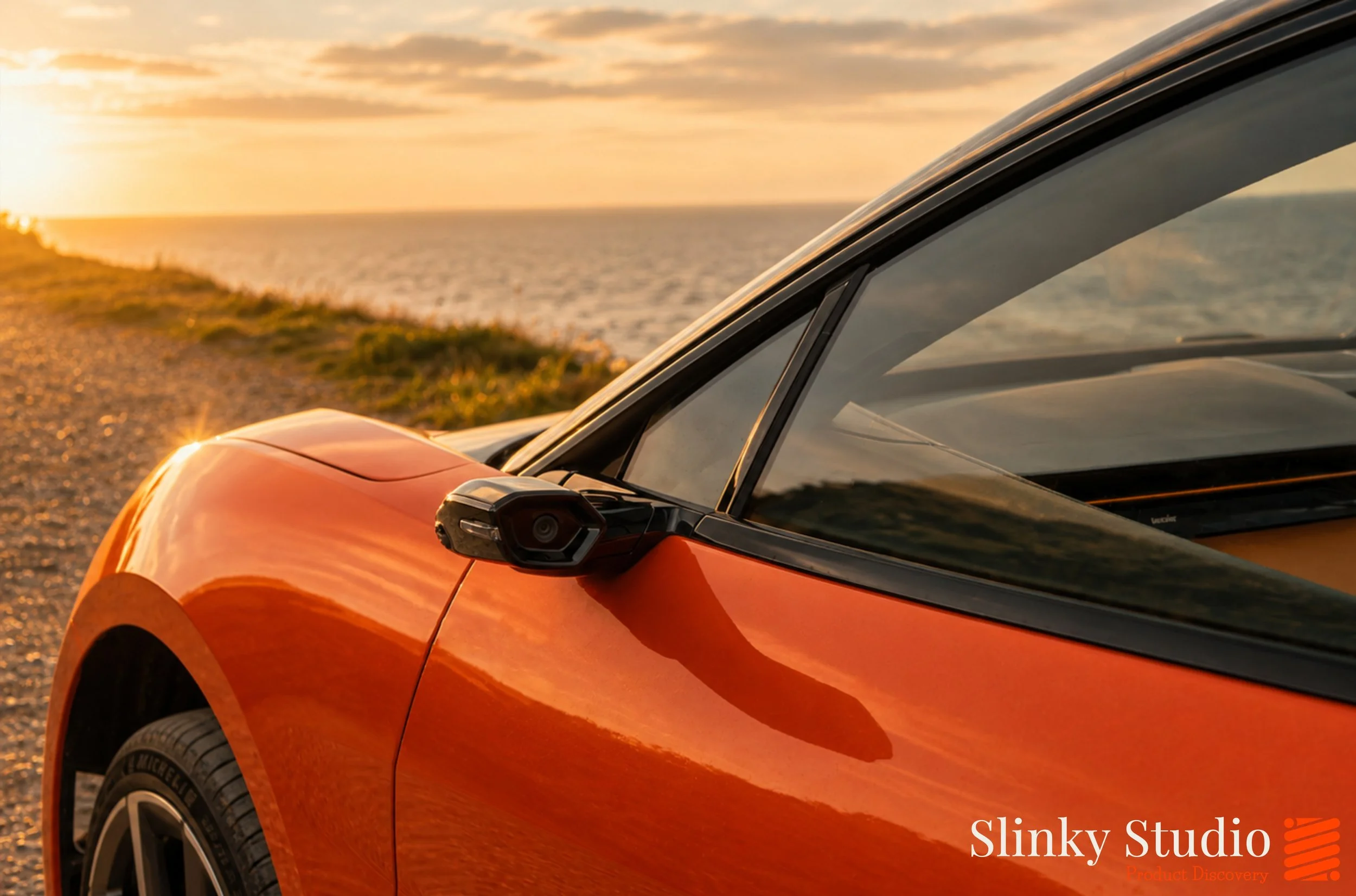
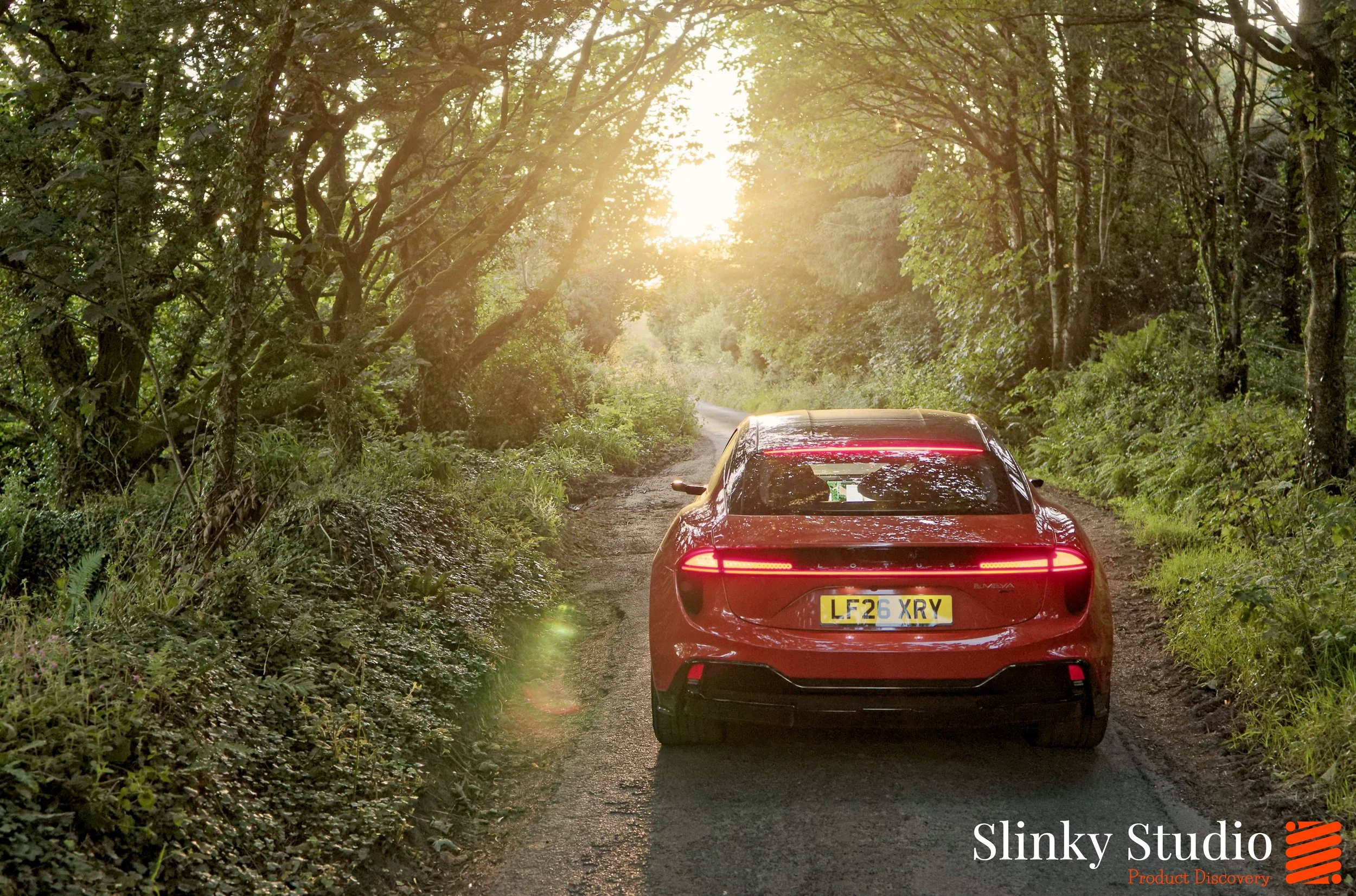
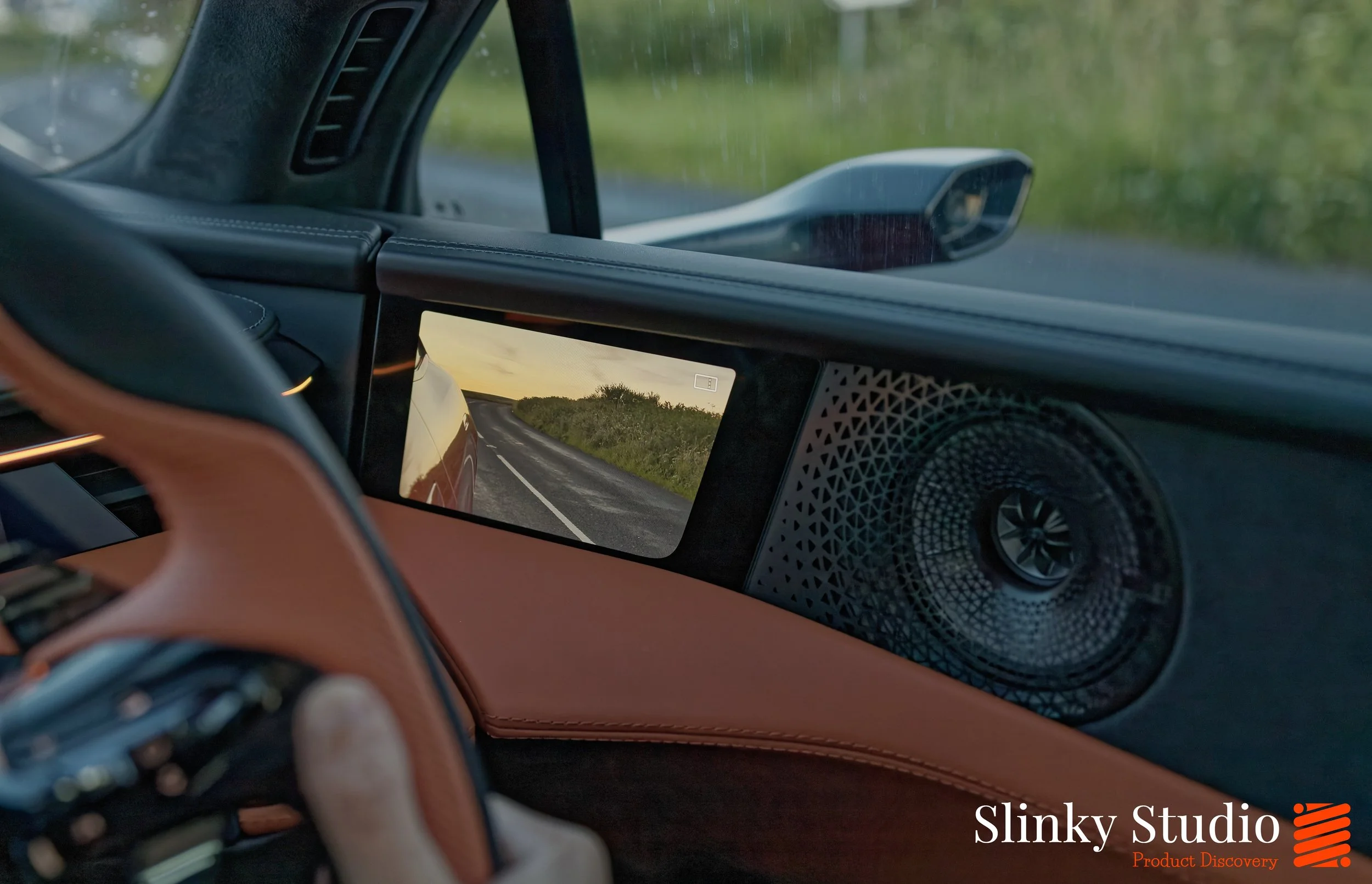
At 4,959mm long, 2,071mm wide and just 1,390mm tall, the Emeya occupies road space with authority, broader and lower than most rivals, and with proportions that only make sense once you're standing beside it and realise quite how far the roofline drops toward the tail. The 22-inch 10-spoke wheels in grey diamond-turned finish fill the arches with satisfying exactness, their machined faces catching the light in a way that feels deliberately jewellery-like against the Fireglow Orange bodywork. Look towards the door mirrors and you'll find they aren't there; in their place, slim camera pods relay a live feed to displays mounted inside the cabin, with the intention of reducing drag; in fact, the entire design has a 0.21 drag coefficient, making it one of the most aerodynamically efficient electric vehicles on the market.
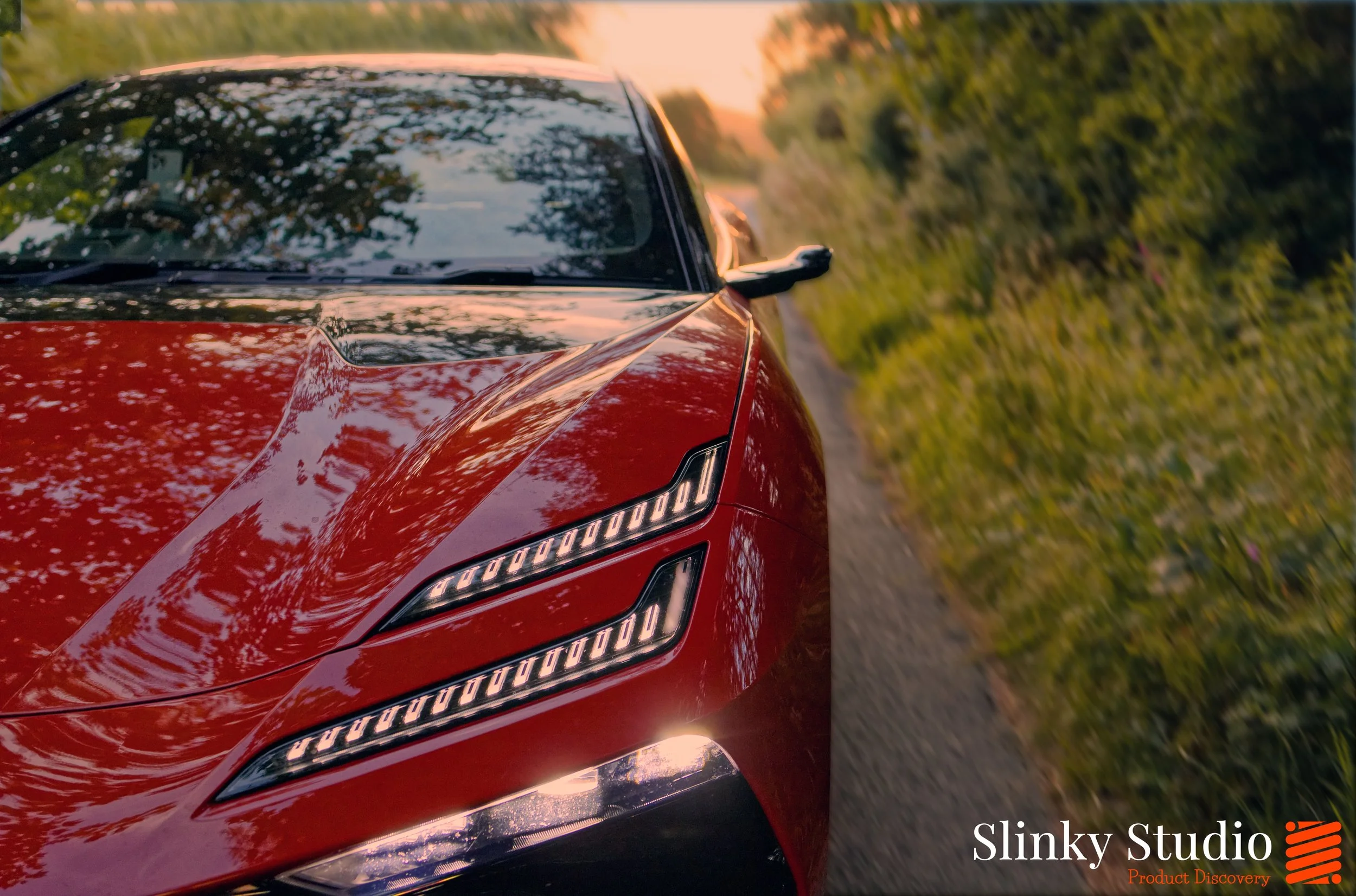
The Emeya is a people pleaser. Children smile as it passes by and adults stop mid-sentence, forgetting entirely what they were about to say, often getting out their phones to snap a photo. It shows that the Lotus brand and their designs are perhaps more marvelled at in electrified form than ever before. This is all amplified by the Fireglow Orange, which in flat light reads as a deep, burnished tone, but the moment sunlight finds the bodywork, it comes alive with a metallic sparkle that shifts and dances as the car moves, as though the paint itself is in motion.





Interior
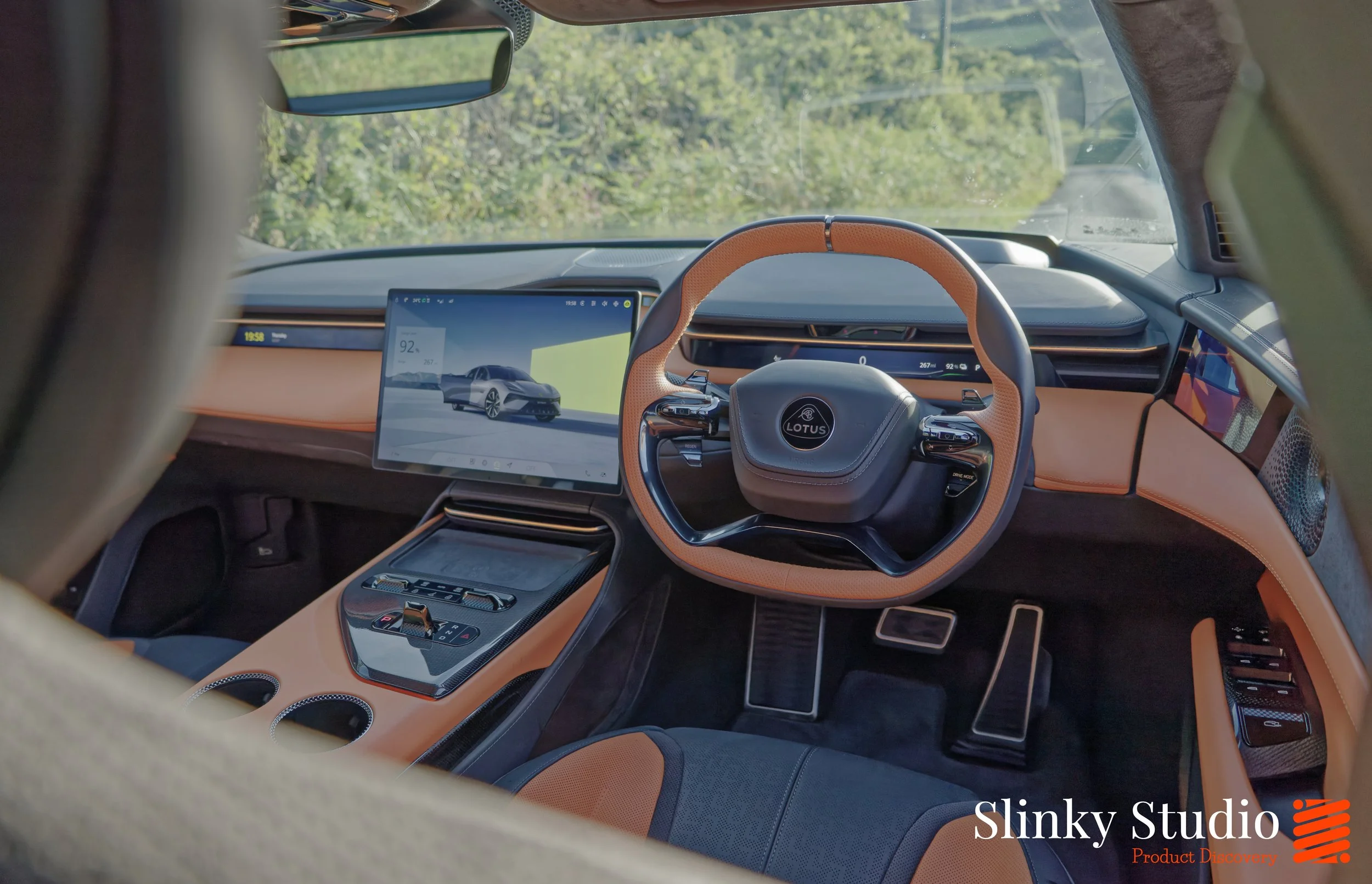
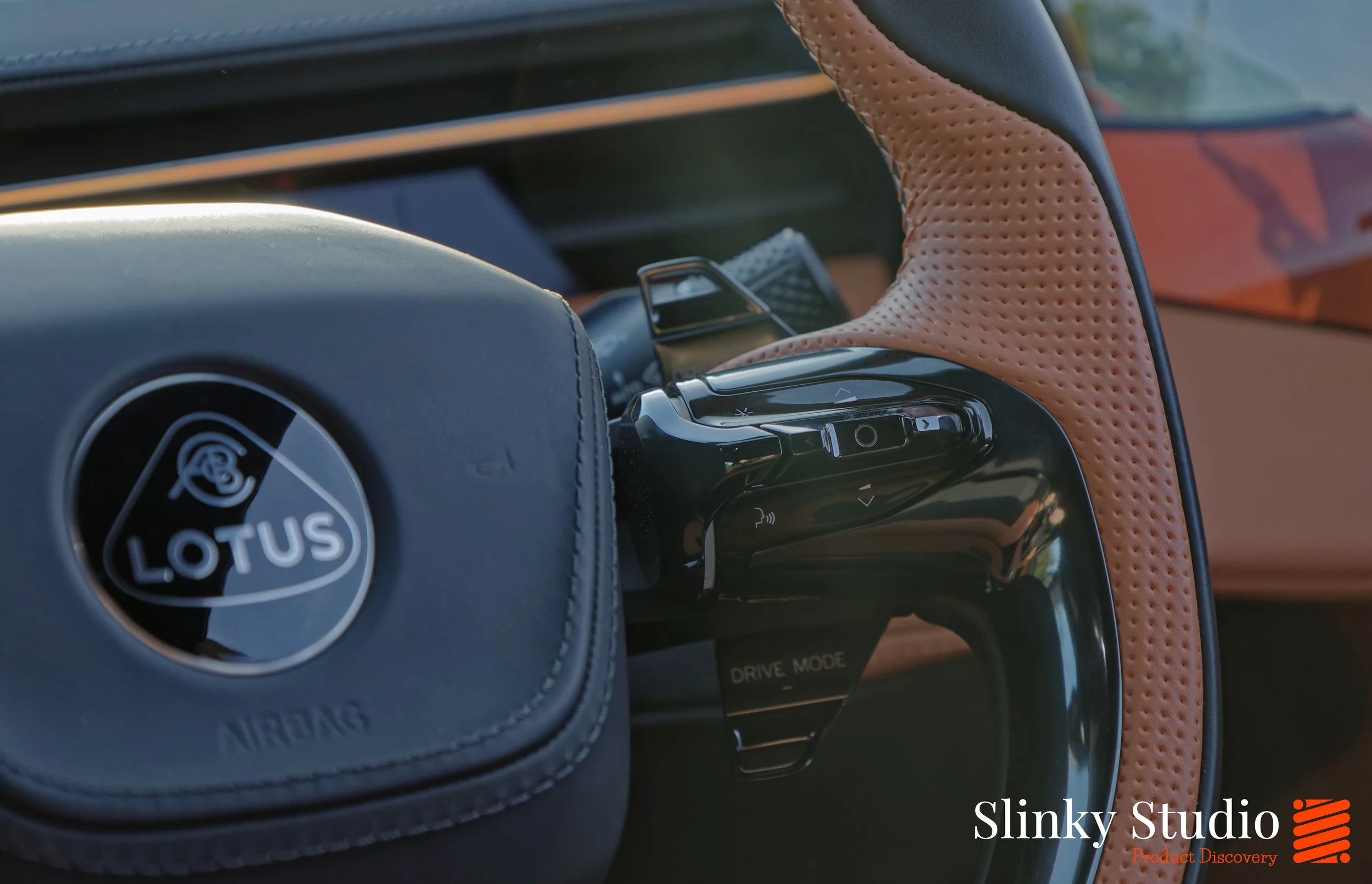
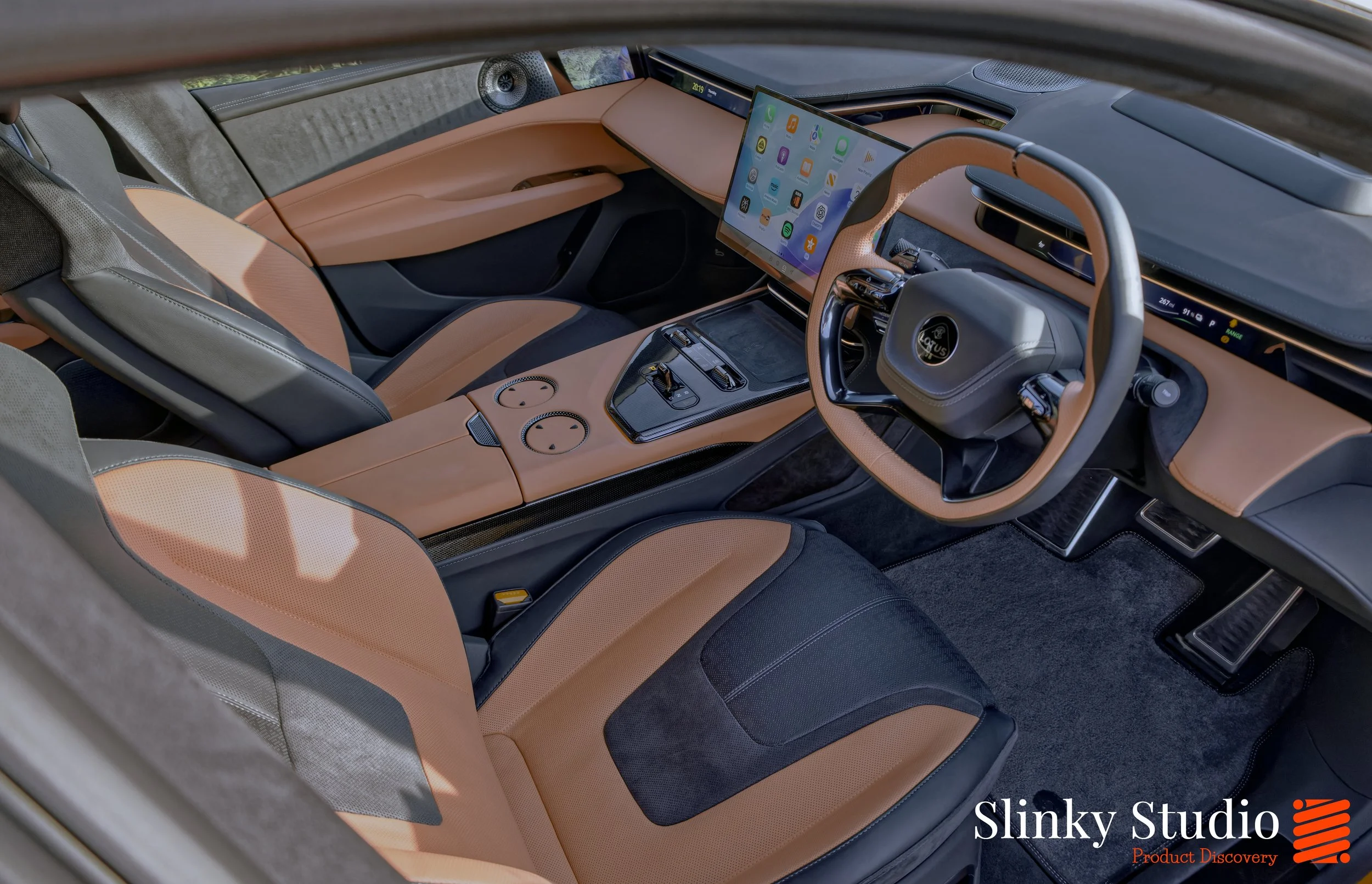
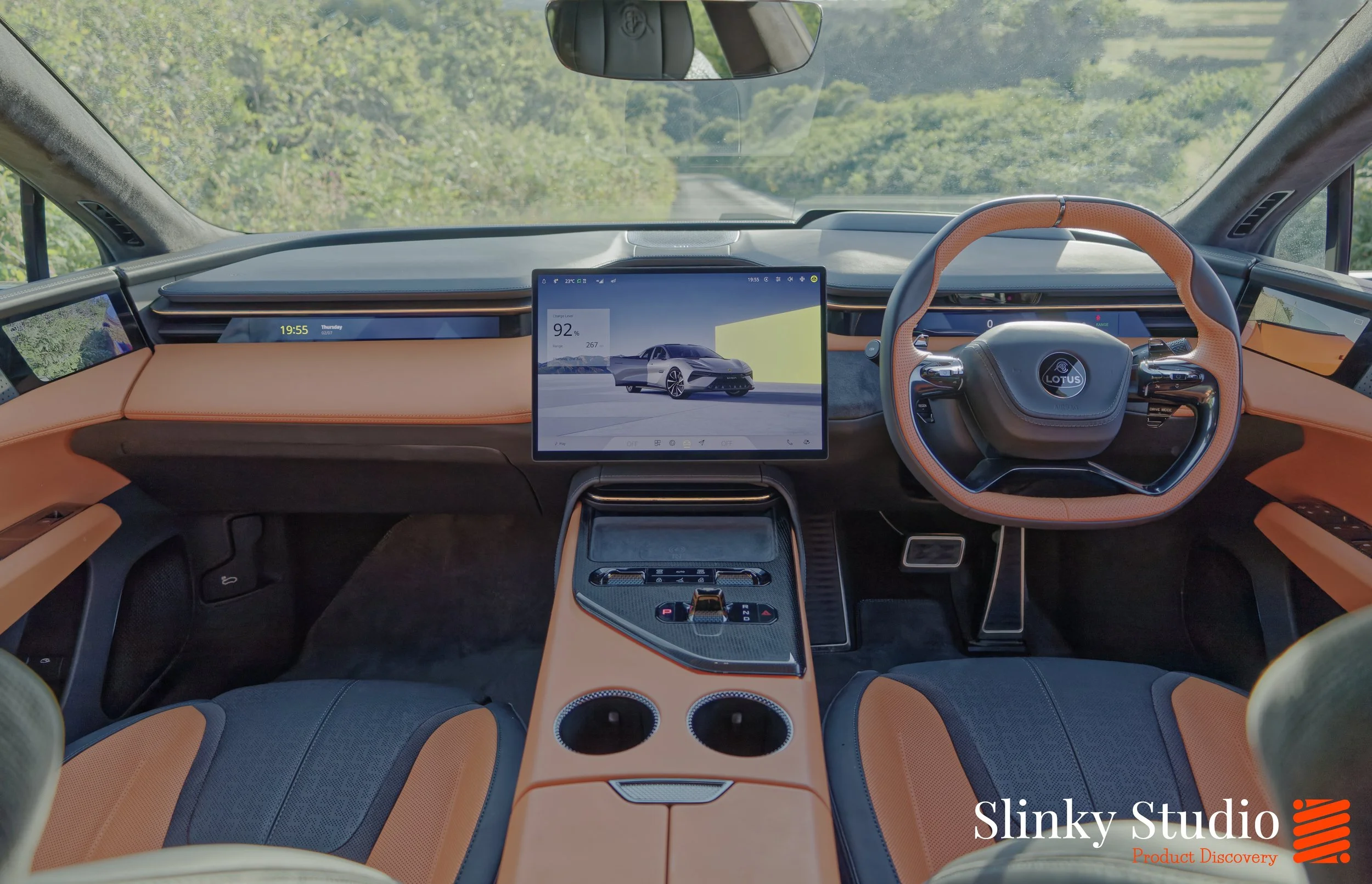
What's curious about the Lotus Emeya is how it presents its cabin. Stepping inside, you're met with an abundance of space, storage galore and technology that features absolutely everywhere. With the Emeya, its mixture of vegan materials (much of it recycled) and styling continually remind you that it’s these details that distinguish a car that has been thoughtfully finished from one that has merely been assembled — and it has character because of it. This isn’t a stark or sparse atmosphere. Step into the driver’s seat, and the self-closing door quietly aligns itself, your seat automatically adjusts to your position and you are invited into a cockpit which feels genuinely premium. Yes, it’s sporty, but it’s not at all basic. Finished in a shade called Carnelian, a rich, terracotta-inflected tone, it breaks up what might otherwise be an all-black affair with real warmth. Against it, you'll find an interior carbon pack that adds visual texture across the fascia and door cards, sports pedals in brushed aluminium and stitching throughout that speaks of genuine craft. The buttons, from the window controls to the drive selector with its right kind of satisfying travel, including the damping or the indicators that snap rather than pop, are all decisive and satisfying to use. The steering wheel sits in the hand with the kind of weighted authority that feels adequate for the car’s size, and it too has lovely clicky controls for audio, self-driving capabilities and even climate controls.
Both the passenger and driver get the full works: heated, ventilated and massaging seats, with an adjustment range extensive enough to suit almost any body shape, and there’s certainly enough padding too. Added to this there's excellent leg and lower back lumbar support. The fully electrical adjustability of everything creates a personalised set-up which supports lengthy drives really well, with your body not left feeling sore or tired, but even possibly more refreshed if using the notably indulgent massaging functions that include options to focus in on different regions of your body.
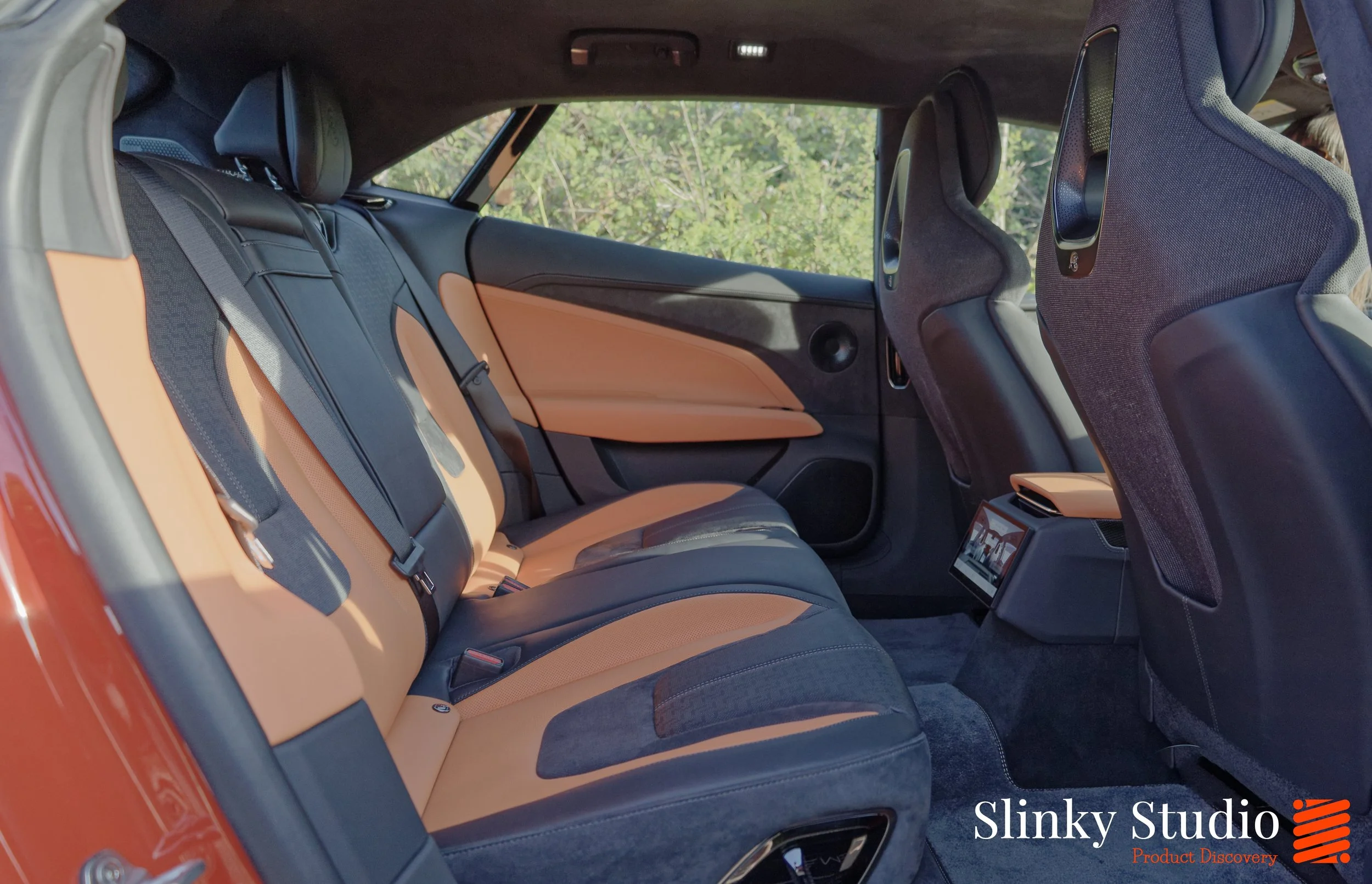
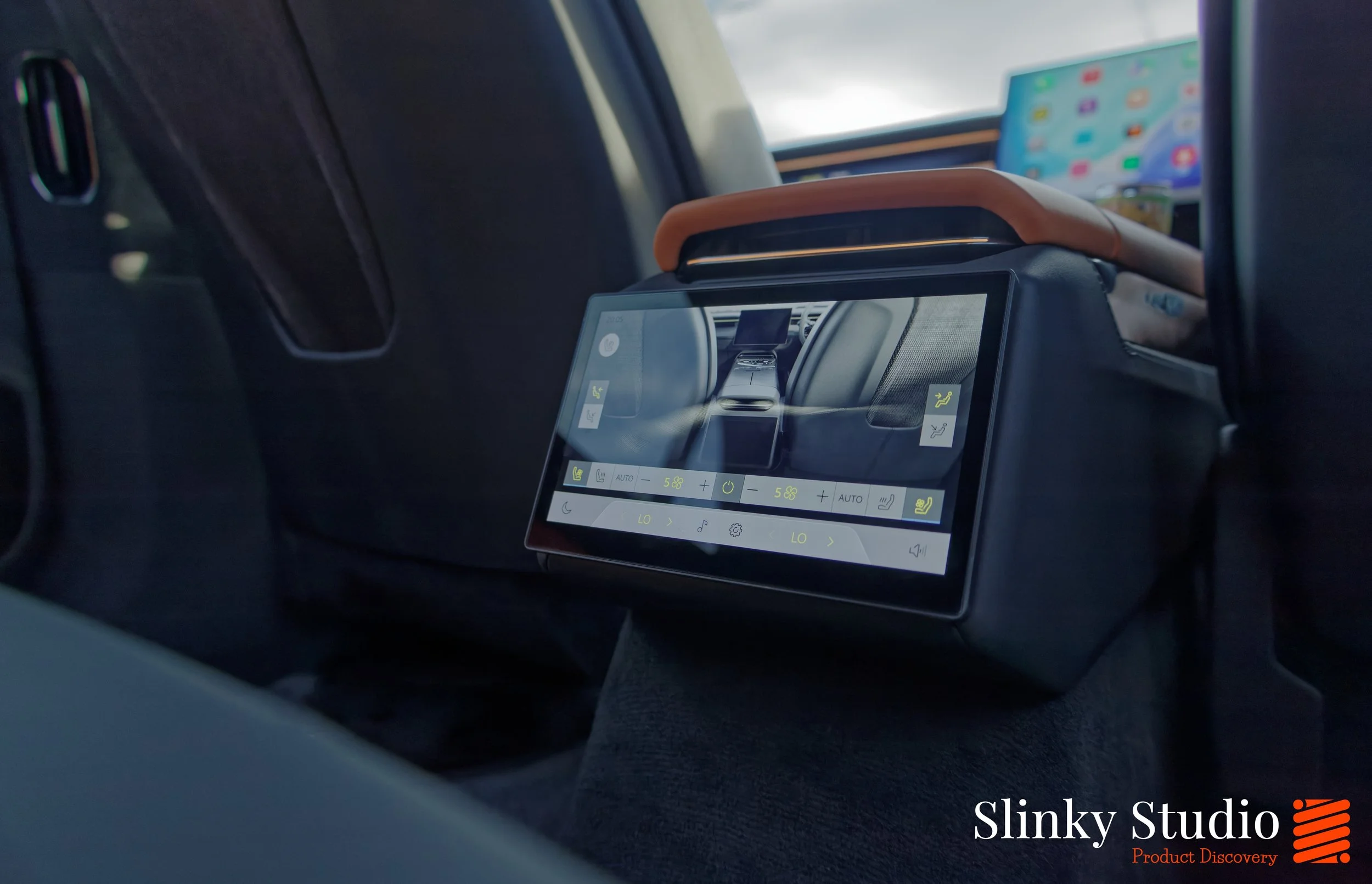
Rear passengers fare extraordinarily well. The Emeya's electric-from-the-ground-up architecture pays dividends here: with the battery pack integrated into the floor structure, the actual floor level sits lower than you'd expect, although there is a modest hump housing electrical gubbins. Despite this, the middle seat is usable rather than a total penance or, if there’s no fifth passenger, it reveals a nice cup holder. Legroom for all is exceptional; there's enough space in the back for someone of considerable height to sit in genuine comfort, meaning the sense of occasion doesn't diminish as you move rearward. Each rear passenger can electrically adjust their seat position and has independent control over their climate via a dedicated touchscreen. Having experienced similar systems across several other brands, the Lotus implementation is the best yet. Temperature, fan speed and airflow direction can all be adjusted individually, with heated and ventilated seat controls and media playback handled from the same screen too. It's intuitive, responsive and feels properly finished.
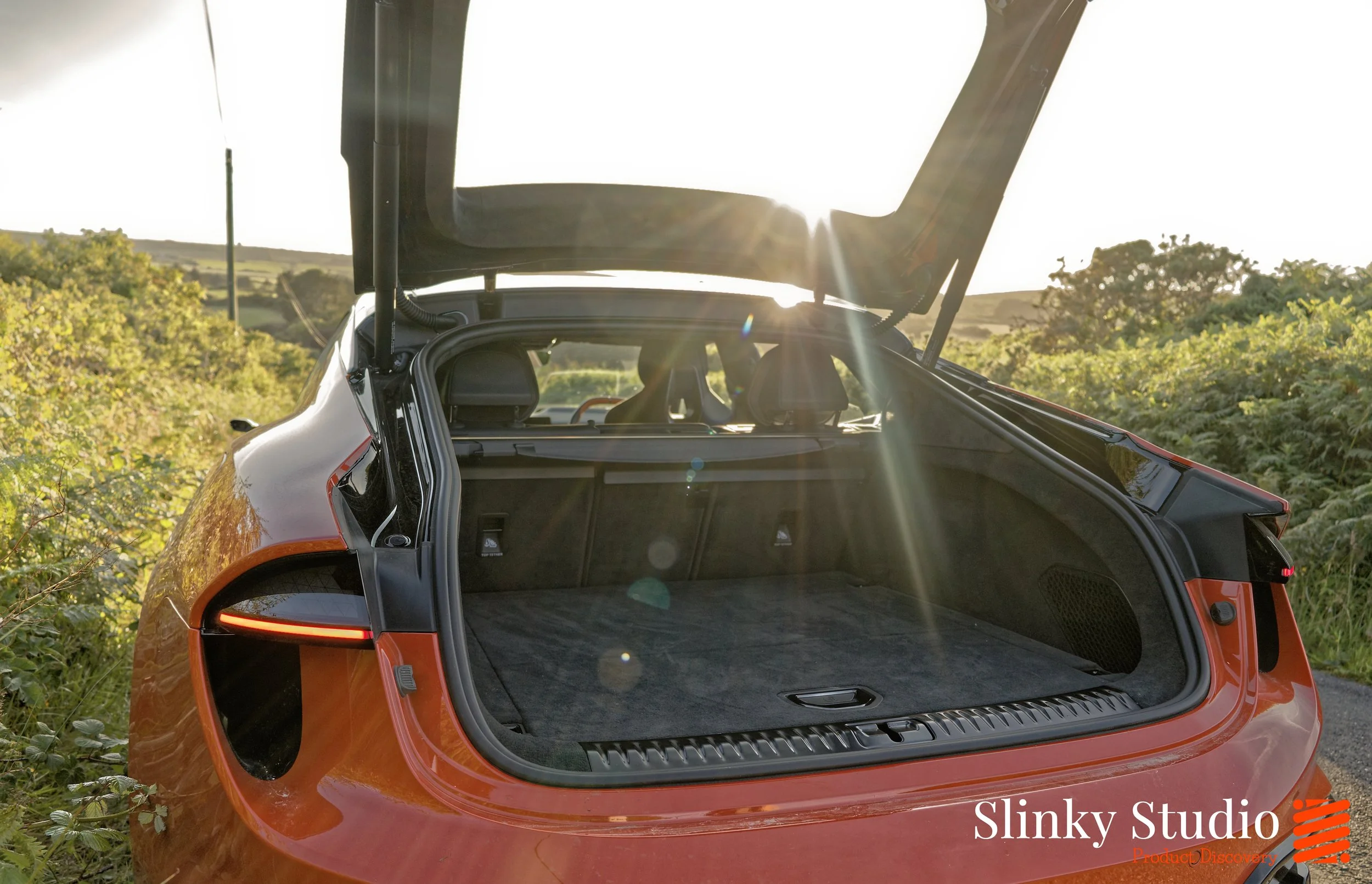
It is, in the end, a genuinely difficult car to categorise. A grand tourer, a sports car, and a practical family saloon all occupy the same body and it make a surprisingly convincing case for each. Five seats and an interior space you simply cannot argue with, make it more sensible than its 600 horsepower and Lotus badge might suggest. Our car doesn't have the panoramic glass roof, but the carbon fibre panel in its place is a visual triumph from the outside, and with the abundance of glass elsewhere, the cabin already feels open and airy. With the pano roof, we imagine it would feel positively celestial.





Infotainment, Displays & Heads Up (HUD)
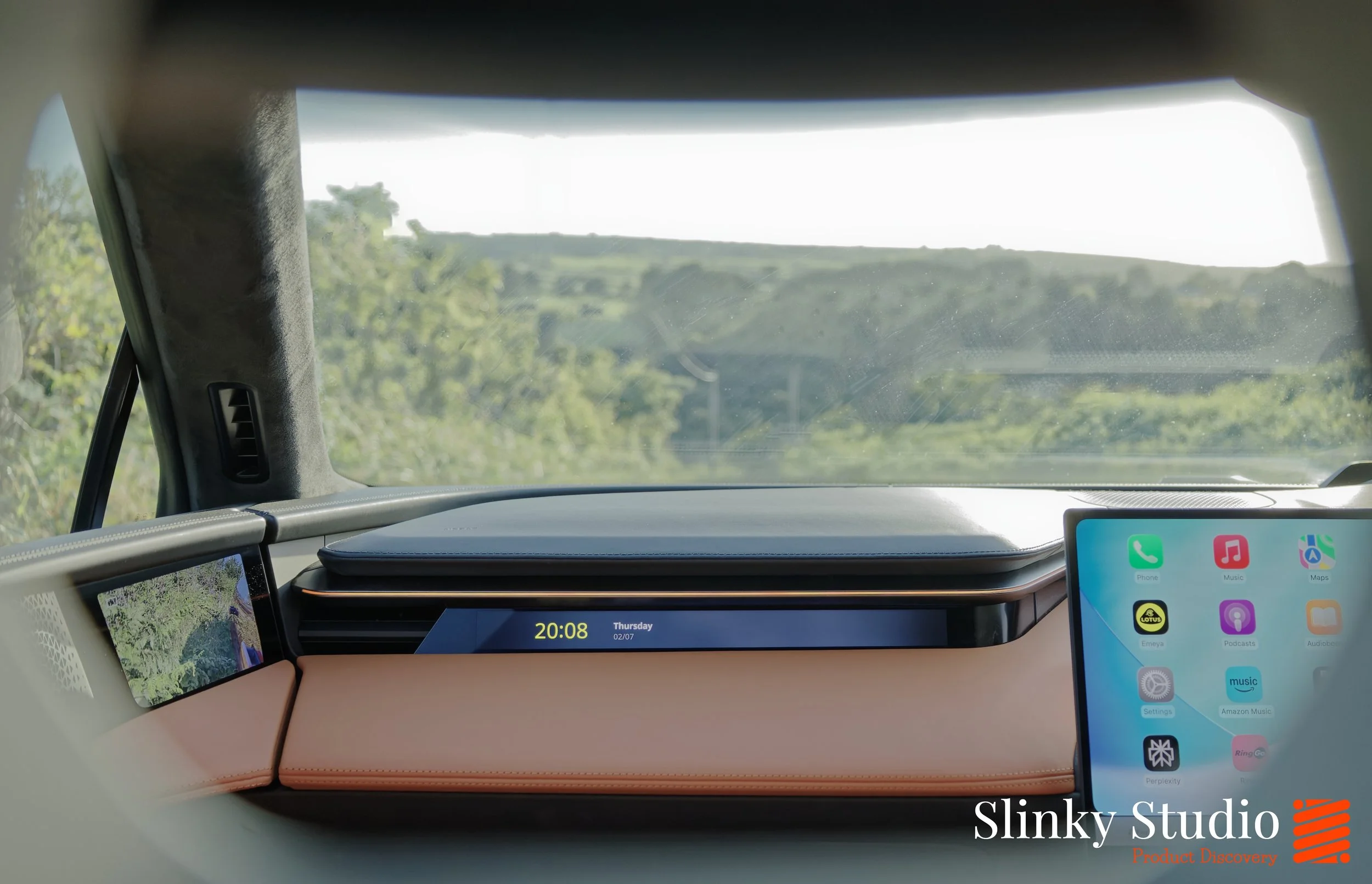
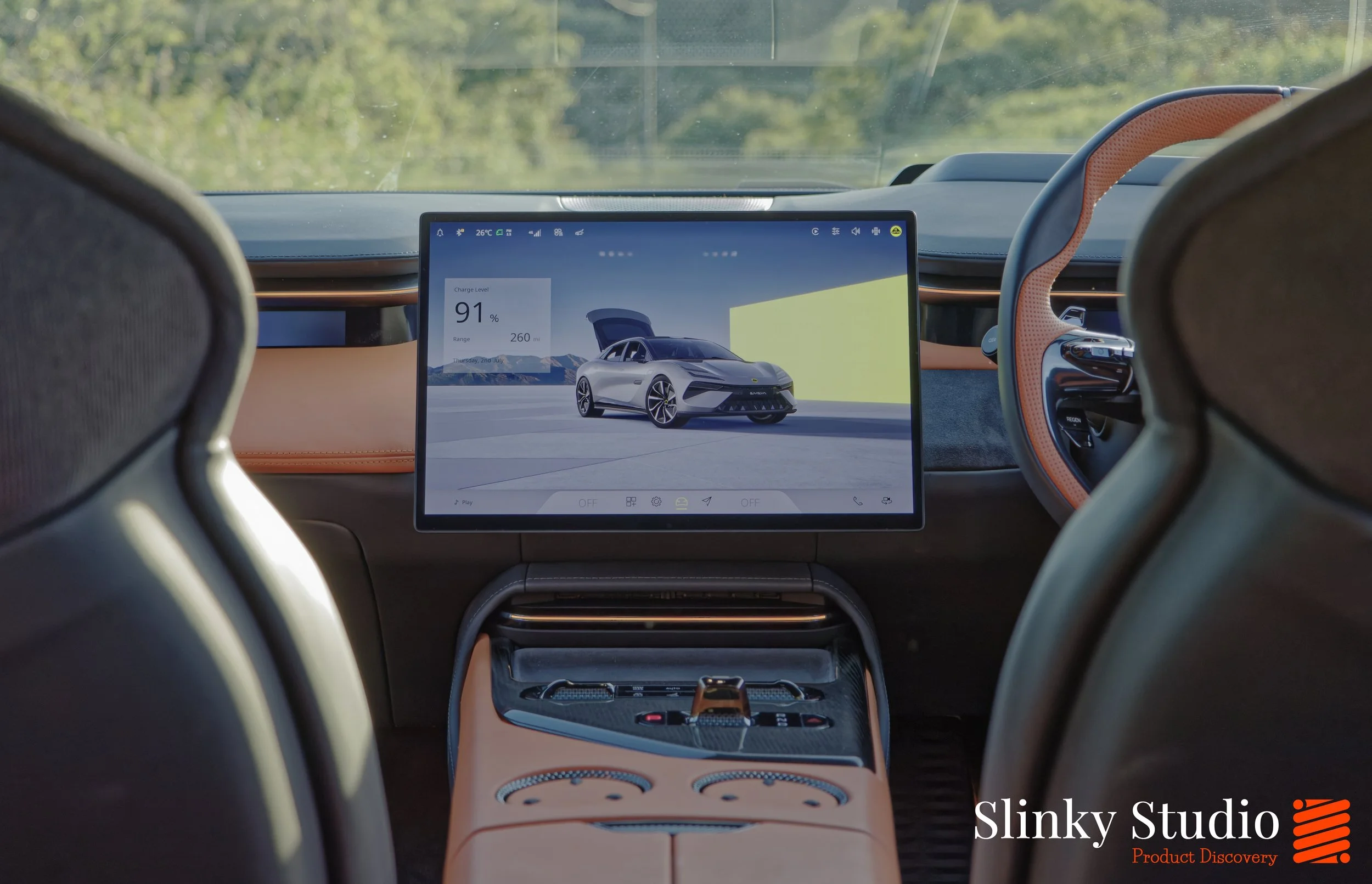
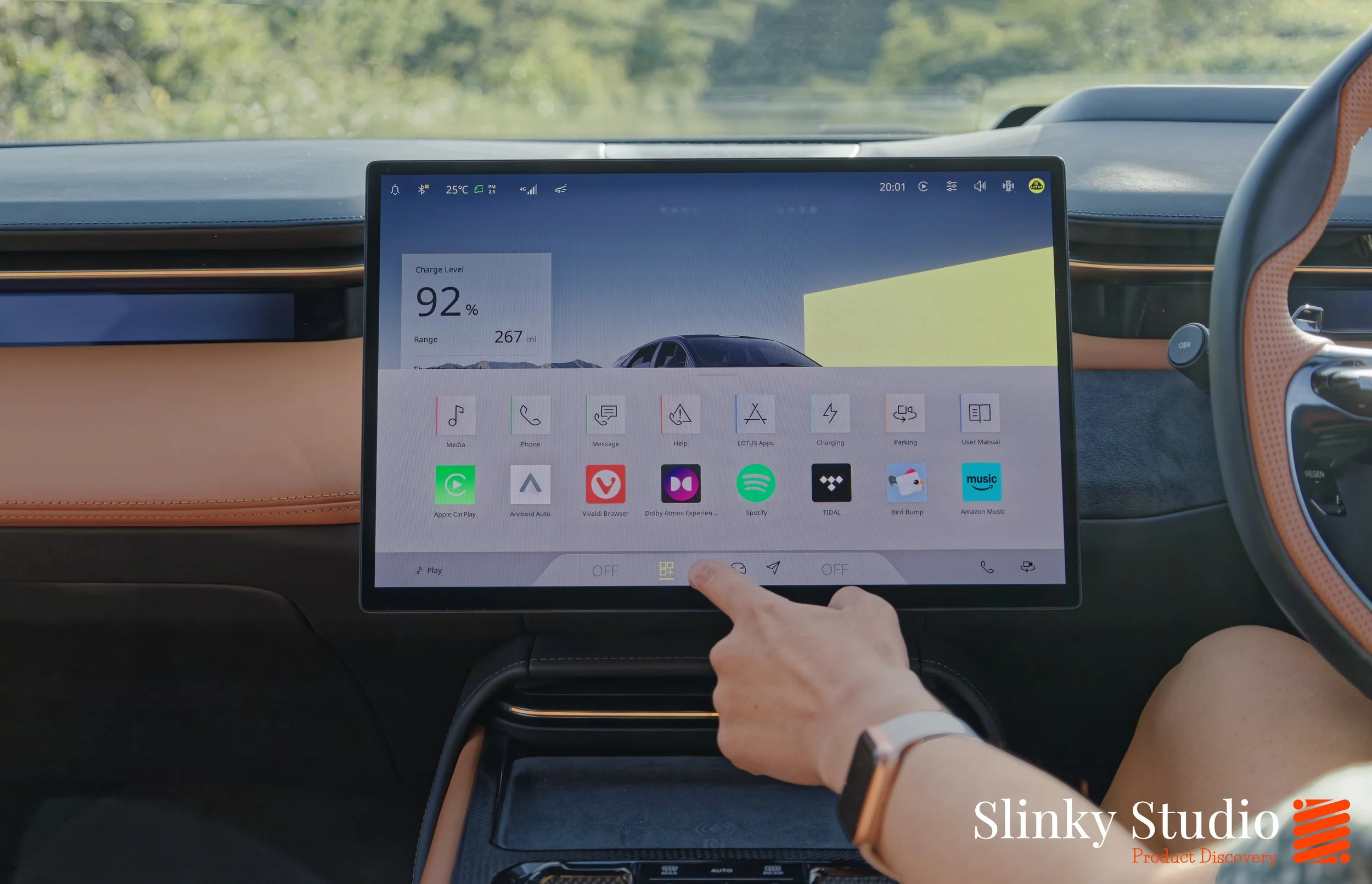
The main infotainment display is a 15.1-inch OLED panel running at 120Hz, and in terms of sheer visual quality, it's a genuinely impressive piece of hardware. Lotus calls the operating system Hyper OS. It has graphics underpinning it from the Unreal Engine used in many video games, and it's laid out in a manner that feels familiar without being derivative: climate controls anchored along the bottom, a menu button, media controls, and a quick settings drawer that reveals itself with a downward scroll. Where Lotus has really mixed the formula, though, are the physical climate toggles mounted directly in front of the screen. A flick up or down adjusts the temperature on each side, and a single press turns that zone's climate on or off entirely. It sounds minor, but in practice it's one of those interactions you reach for instinctively, and finding it exactly where you expect it every time is the kind of thoughtfulness that separates genuinely considered interiors from those that merely look the part.
Hyper OS itself runs deep. Beyond the climate and media layers, it encompasses full vehicle customisation across driving modes, regenerative braking settings, suspension and steering response, ambient lighting preferences and aerodynamic behaviour. The native navigation application is well executed, with charging stops intelligently woven into routes and real-time updates that felt reliable throughout our time with the car. There's a pre-conditioning feature accessible directly from the home screen, allowing the battery and cabin to be brought to the right temperature before departure, and energy consumption data is presented clearly enough to actually inform how you drive rather than simply existing as a figure in a menu. The Hyper OS demo mode, which showcases the KEF audio system through a dedicated video experience, is worth exploring at least once.
It would be easy to glance at things like the fact that the front passenger has their own 12.6-inch touchscreen display, flush-mounted into the dashboard, and exclaim, gimmick! But you quickly understand that something like this has been elegantly integrated rather than bolted on as an afterthought. It’s the right level for your hand to just tap without having to reach across to the much larger centrally mounted infotainment screen, so you can quickly change a track, pause playback, or adjust the radio without interrupting the driver or navigating through layers of menus.
The heads-up display covers the essentials well: speed, navigation arrows, a map view and live traffic, all sitting naturally in the lower windscreen where your eyes already want to be during route guidance. A slight softness and outer glow to the projection stops it matching the sharpest HUD implementations we've used. It’s not a significant complaint, but it's the one area of the Emeya's display suite that feels like it has a little further to go.
The LED lighting strip that wraps around the interior adds another layer of personality, corresponding to the car's functions in real time. The ambient light glows red as the temperature climbs and shifts to blue as it drops, pulses gently green when the car is charging, and responds to drive mode changes with shifts in tone and intensity. It sounds like it could be gimmicky, and in lesser hands it would be, but Lotus has calibrated it well, and it makes the Emeya feel alive and responsive in a way that's genuinely pleasing rather than distracting.
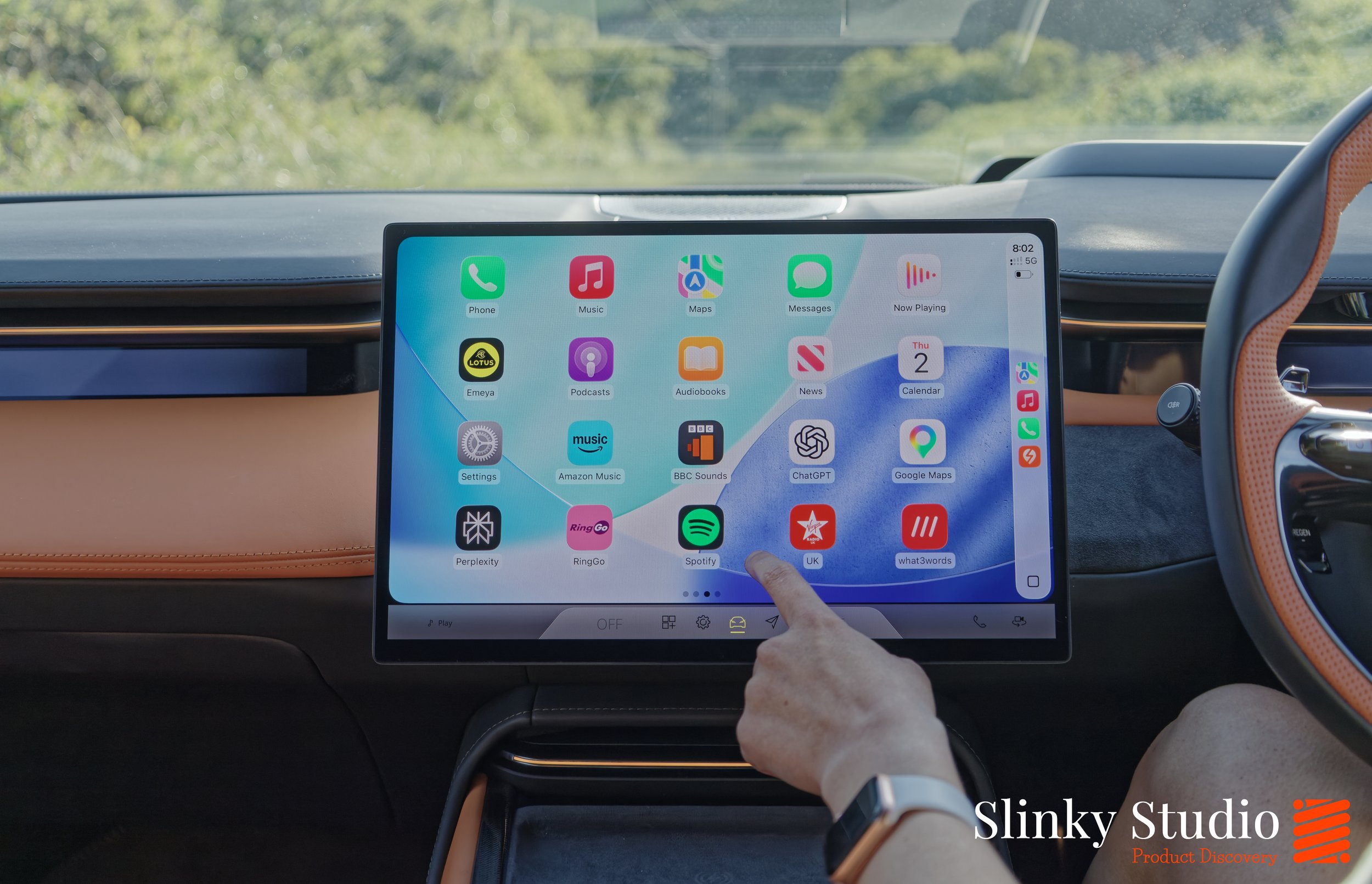
Apple CarPlay is offered in a wide, full-screen format, and we used it for the majority of our time with the car. It connected without issue every single time we got in; which sounds like a low bar until you've experienced the alternative. Music through Apple Music via CarPlay sounds excellent, benefiting considerably from the KEF system underneath. The screen carries a good anti-fingerprint coating too: marks don't accumulate with the visibility they do on some rivals, and in direct sunlight, the display remains legible rather than retreating into a wash of glare.
Voice commands take a little adjustment to learn the system's preferred phrasing, but once that's understood, climate control and navigation requests are handled reliably and without fuss. All passengers were understood clearly from across the cabin. It isn't quite at the level of the XPENG G6's voice intelligence, which sets a very high bar in this regard, but it's competent and consistent.
Tech
Emeya's technological ambition isn't reserved for the dashboard and its constellation of screens; it's scattered across every surface, inside and out. Eighteen radars, twelve cameras, and LiDAR sensors are distributed around the exterior, feeding into an Nvidia processor that forms the backbone of what Lotus intends to become, which is a car with Level 4 full autonomy through over-the-air software updates. In its current Level 2 form, it's already genuinely impressive. Engage it with a press of the button on the steering wheel, and the Emeya takes over with quiet confidence. Adaptive cruise modulates speed smoothly through stop-start traffic without the jarring brake-and-surge rhythm that plagues lesser systems, and lane-keeping places the car with measured precision. Lane changes are handled cleanly, and sampling the system on country roads with clear markings revealed it coping better than expected: composed, unhurried and accurate. The fact that the basics are covered this well, inspires confidence in greater things.
In car parks, the Emeya borders on showing off. Spot a bay, tap the screen, and the car manoeuvres itself into position with a speed and confidence that matches how you'd do it yourself, although rather better than most people actually would. It's absolutely a feature you’d use on a daily basis and is, to be honest, the easiest way to park its long format with exactness. Manually parking is also aided by the various camera views, including 360-degree and top-down perspectives, managed through the central display, and the resolution across all of them is excellent. Navigating tight Cornish lanes or threading into a parallel parking space with the overlay guidelines feels almost serene, the Emeya providing an exact and constant understanding of its own footprint in a way that quickly becomes indispensable. Even in low light, the system performs well.
Then there is the sound. The 23-speaker KEF system with Dolby Atmos and 3D spatial audio is quite simply one of the finest we have encountered in any vehicle, sitting at the very top of that list alongside the Polestar 3 and Genesis GV60. Lotus has installed an audio demonstration through Hyper OS, and we sat with it longer than intended. Playing 'Something' by The Beatles, the guitar introduction materialised not from the speakers but from somewhere in the middle of the cabin: three-dimensional and almost like the physical instrument was present. The strings of the orchestral arrangement swept from behind the left shoulder, arced overhead and settled somewhere ahead of the windscreen. George Harrison's vocal sat precisely centred, while the bass moved independently beneath everything else; felt as much as heard. Details we had never consciously registered in a recording we know well.
Charging and Range
Despite sitting on 800-volt architecture, we never once charged the Lotus Emeya anywhere other than from our Cord EV charger, mostly using excess solar from our PV panels — which is quite an achievement considering it has a 102kWh battery and we drove hundreds of miles over the weeks we had the car. If we were to pay to charge the empty battery to full it would be around £8 at home on our Octopus Intelligent Go tariff. To put that into perspective, a petrol engine, equivalent in performance, would achieve 13 mpg in real-world mixed driving, so covering 320 miles would require around 111 litres, and at current UK pump prices that's approximately £167 in petrol. Having said that, with the right public charger, the Emeya is one of the quickest charging cars currently on UK roads, getting from 10% to 80% in as little as 14 to 18 minutes, and pricing for these types of chargers is considerably more than charging at home. Nevertheless, it does highlight how such immense performance can be driven at such little cost.
Range is trickier to discuss. On journeys where we were driving in a more spirited fashion, pressing hard and carrying speed into corners, the Emeya was returning around 2 miles per kWh, which is actually quite respectable for the sheer performance on offer. On a 102kWh battery that translates to a real-world range of roughly 180 to 200 miles. That's the honest enthusiastic figure, and it reflects the fact that 603 horsepower is very easy to access and very enjoyable to use.
Where the Emeya makes its most compelling case is as a grand tourer, because it loves the open road and soaking up long journeys, whilst still allowing for occasional bursts of enthusiasm for good measure. In Tour mode, driven over great distances with consistent speed, the Emeya is fairly gentle on its battery, and the consumption figures are good with 3.2 miles per kWh, which pushes real-world range out to around 320 miles, achieved with a mixture of driving styles. For a car of this performance, that's a strong result, and it underlines that the Emeya has genuine continent-crossing ability when you want it. It's worth noting that all of our driving took place during an extended heatwave, with the air conditioning working hard against temperatures around 30 degrees throughout.
Driving Raw Electrical Performance
We're pleased to say that the Lotus sports car lineage is flowing through the Emeya's electrons to reveal a drive that is serious about performance and handling in equal measure. Yes, we clocked 0-60 coming in under 4 seconds, but that's really a straight-line story and the Emeya is so much more than that. We pointed the Emeya towards a particular coastal route here in Cornwall, running between Zennor and Land's End. These are not roads that forgive indifference. Narrow at times, windswept strips of tarmac threading through some of Britain's most elemental landscape, sea views opening and closing between granite outcrops, wild moorland dropping away to the Atlantic, sharp bends arriving without much warning, the road rising and falling with a rhythm that shows off the capabilities and character of the Emeya with absolute clarity.
It's a drive fizzing with a playful personality that feels almost implausibly alert for a car weighing over two tonnes, though the mass of the battery pack sits low in the floor and grounds the car with a composure. It has the dynamism of a compact sports car that can just tuck itself into bends as you accelerate in or out of them, with steering and grip so assured from an all-wheel drive setup with torque vectoring, that hairpin turns feel like you're travelling on rails; and meanwhile visibility is so broad that everyone in the Emeya can soak up the sweeping vista views along the way. Lotus has delivered a driving experience with acceleration that can cause stomachs to bubble if you choose, but it's also another car entirely because of how controllable and composed it can be, making 70mph feel more like 30. This level of refinement is amplified by a very quiet cabin, made possible by a combination of double glazing, tight build quality, good insulation and active road noise cancellation through the speakers. Conversations are pleasant and long journeys can be genuinely restful.
One of the core principles a grand tourer needs is the ability to relax and glide along without fatigue setting in. The Emeya delivers that across hours of continuous cruising, remaining enjoyable rather than merely tolerable. Four driving modes, Range, Tour, Sport and Individual, allow you to dial in exactly the character you want for the road ahead. Coasting through town, despite the dual motors outputting 603bhp, 450kW of power and 710Nm of torque, the Emeya is not brash. It's a relaxing and easy drive at low speeds, content to potter as convincingly as it is to devastate.
One of the most interesting aspects of the Lotus Emeya 600 Sport SE is a specification that includes active and adaptive air suspension with continuous damping control, which uses a camera to read the road ahead and anticipate what it's about to drive into. It seems to work, as potholes are less noticeable, raw road surfaces are smoothed out and speed bumps don’t appear to be as 'sports car iron fisted hard' as you might expect. The Sport SE adds the Lotus Dynamic Handling Pack on top of that, featuring active anti-roll control and rear-wheel steering. It's quite a wide car and definitely a long one, yet tackling roundabouts and tight turns is not in any way an issue, the rear-wheel steering providing a short turning radius. The cramped Cornish lanes, currently made worse by overgrown hedges, were navigated with surprising ease, the suite of cameras, including the overhead view, presenting the Emeya as a remarkably manageable thing in conditions that would make many drivers of large cars anxious.
Its acceleration progression is also perfect, and you can feel Lotus has paid masses of attention to this detail. The power doesn't simply arrive all at once in a wall of thrust but builds with a linearity through the pedal that feels almost analogue, each stage of travel rewarding you with a proportionate, predictable response that makes you feel like you're conducting the car rather than merely hanging on to it. All of this performance is brought to a satisfying stop by the regenerative braking system, operated through machined aluminium paddles on the back of the steering wheel that allow you to cycle through four levels of regen on the fly; an implementation we loved. The brake pedal itself feels positive and well-weighted, but we rarely needed it; the regen proving sufficient for most situations and particularly effective downhill, where a few extra miles of range could be recovered in a matter of seconds.

Verdict
Lotus has done something quietly remarkable with the Emeya. They have taken everything that made them matter, the obsession with handling, the instinct for proportion, the understanding that a car should feel like an extension of the person driving it and applied it to an entirely new kind of powertrain without losing a single thread of what makes a Lotus feel like a Lotus.
The result is spectacular. Not in the raucous, combustion-fuelled sense of cars that announce themselves through noise and drama, but through genuine competence at the very highest level. The steering is exquisite, the handling so assured it borders on telepathic, and the acceleration so linear and so well-judged that you find yourself seeking it out not for the speed itself but for the sheer pleasure of the progression. On the coastal roads between Zennor and Land's End, in Fireglow Orange against an Atlantic sky, it is one of the most complete driving experiences we have had.
And yet the Emeya is equally at home doing nothing of the sort. Because it's electric, because the cabin is crafted with luxurious finishes and it's hushed and the ride is beautifully composed - 603 horsepower always there when you want it and entirely invisible when you don't, it is also a supremely relaxed grand tourer. It's a car that road trips without effort, that seats five in genuine comfort, that charges in the time it takes to stretch your legs, and that arrives at the other end of any journey having made the distance feel shorter than it was.
With a starting price of £86,305 and £124,255 for our specced version, it demands serious consideration rather than an impulse. But spend time with it and the question shifts from whether it's worth the money to whether anything else at this price does quite this much, quite this well, with such low running costs. The answer, honestly, is no, so far as we are concerned.