Lotus Eletre Review
A high-riding Lotus with 905 horsepower, all-wheel drive, wrapping you in a cabin that outshines its German rivals. Here we have the Lotus Eletre 900 Sport (yes, that is 900 bhp), an all-electric dual motor setup that attempts something very simple: take the brand's core design ethos of sporting and build a fundamentally ludicrously quick SUV that is one of the fastest in the world. But can something so big, with this much ground clearance, deliver genuine dynamism in the way it drives and a truly memorable experience behind the wheel? All this whilst still offering genuine interior comfort and the long-range capability to actually use it? We’ve spent two weeks behind the wheel zipping in and around Cornwall to find out. Prices start at £84,990, going up to £137,205 for the top-spec performance model with some of the extras like we have.
Design
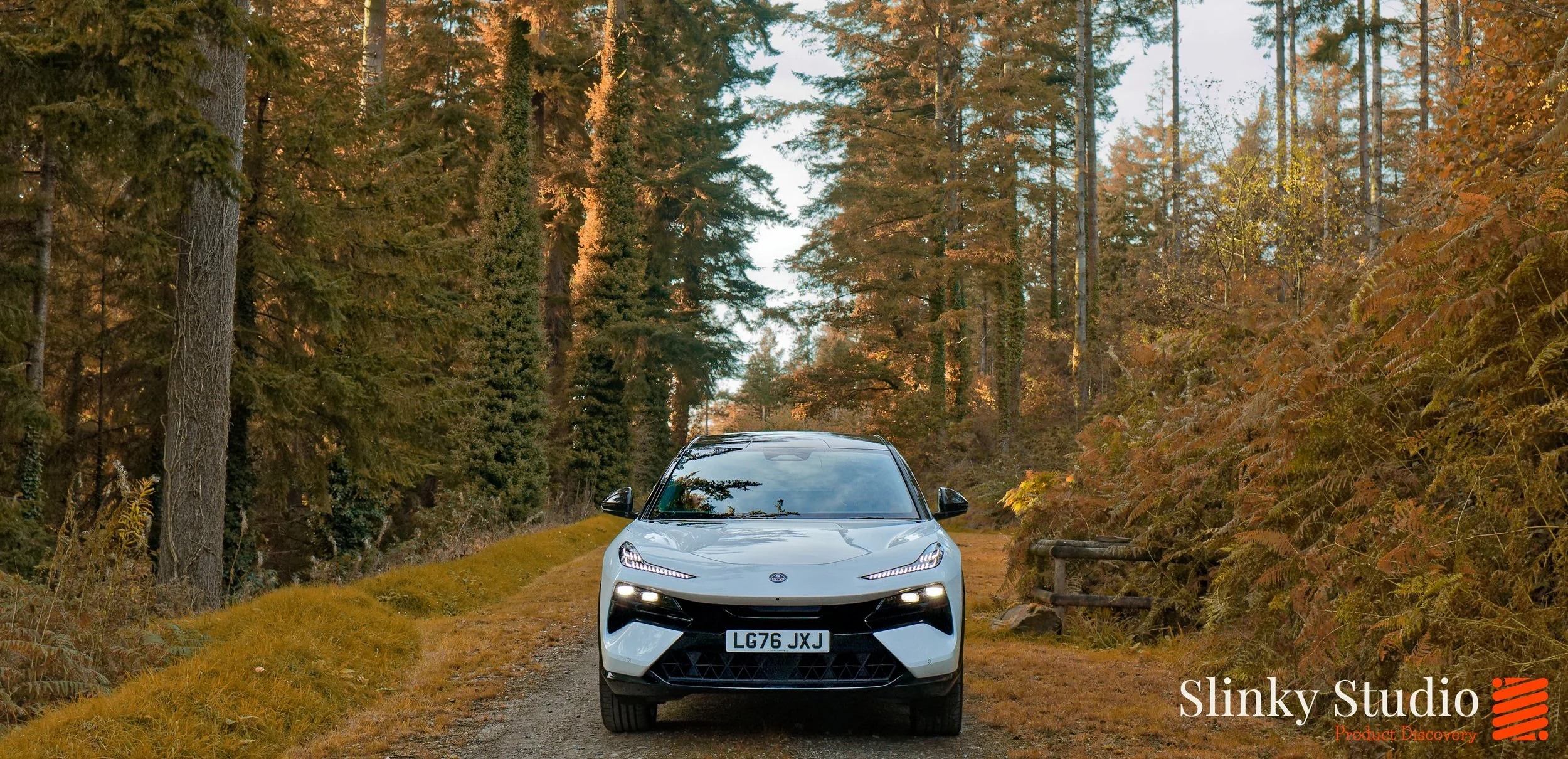
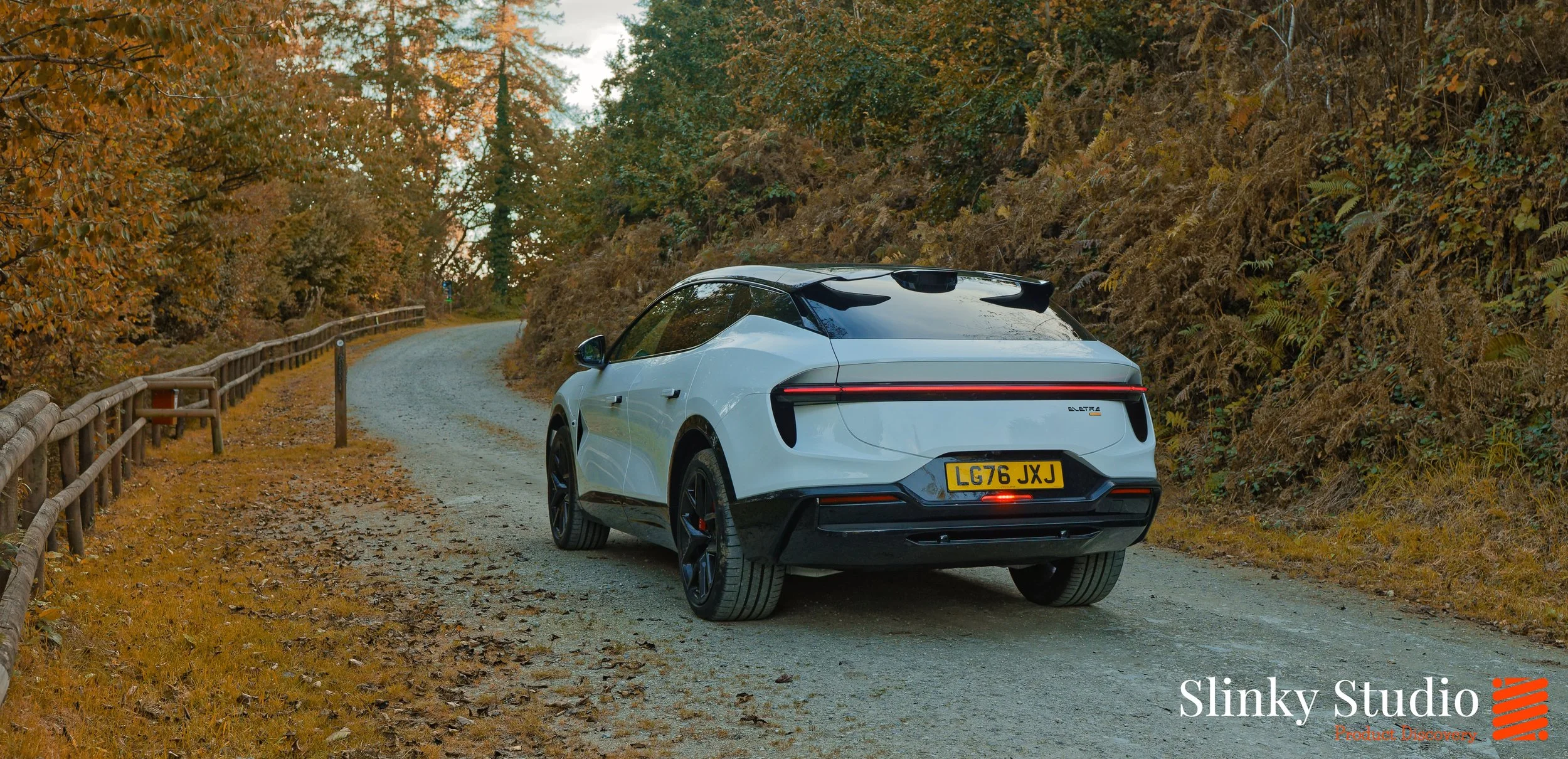
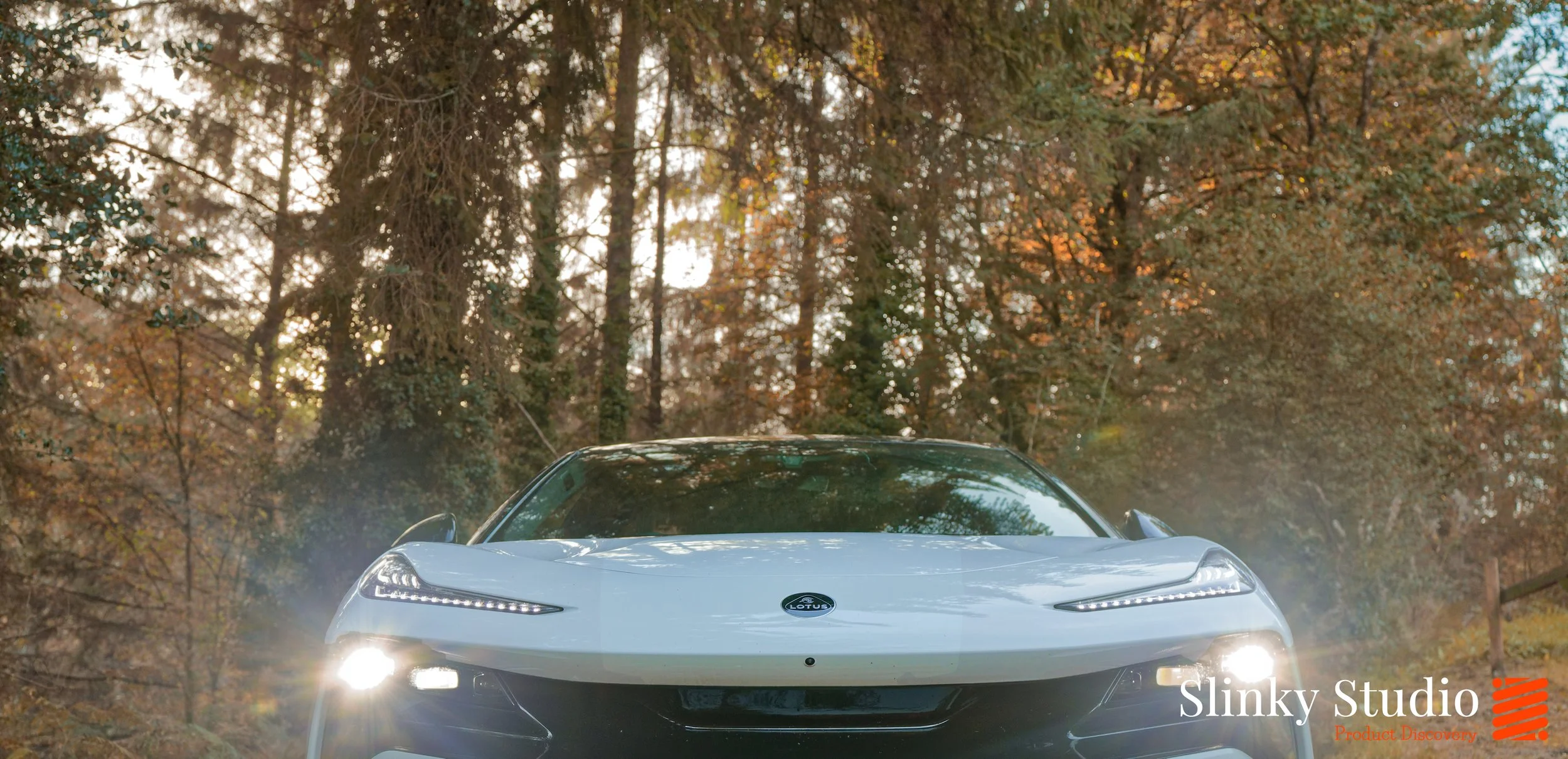
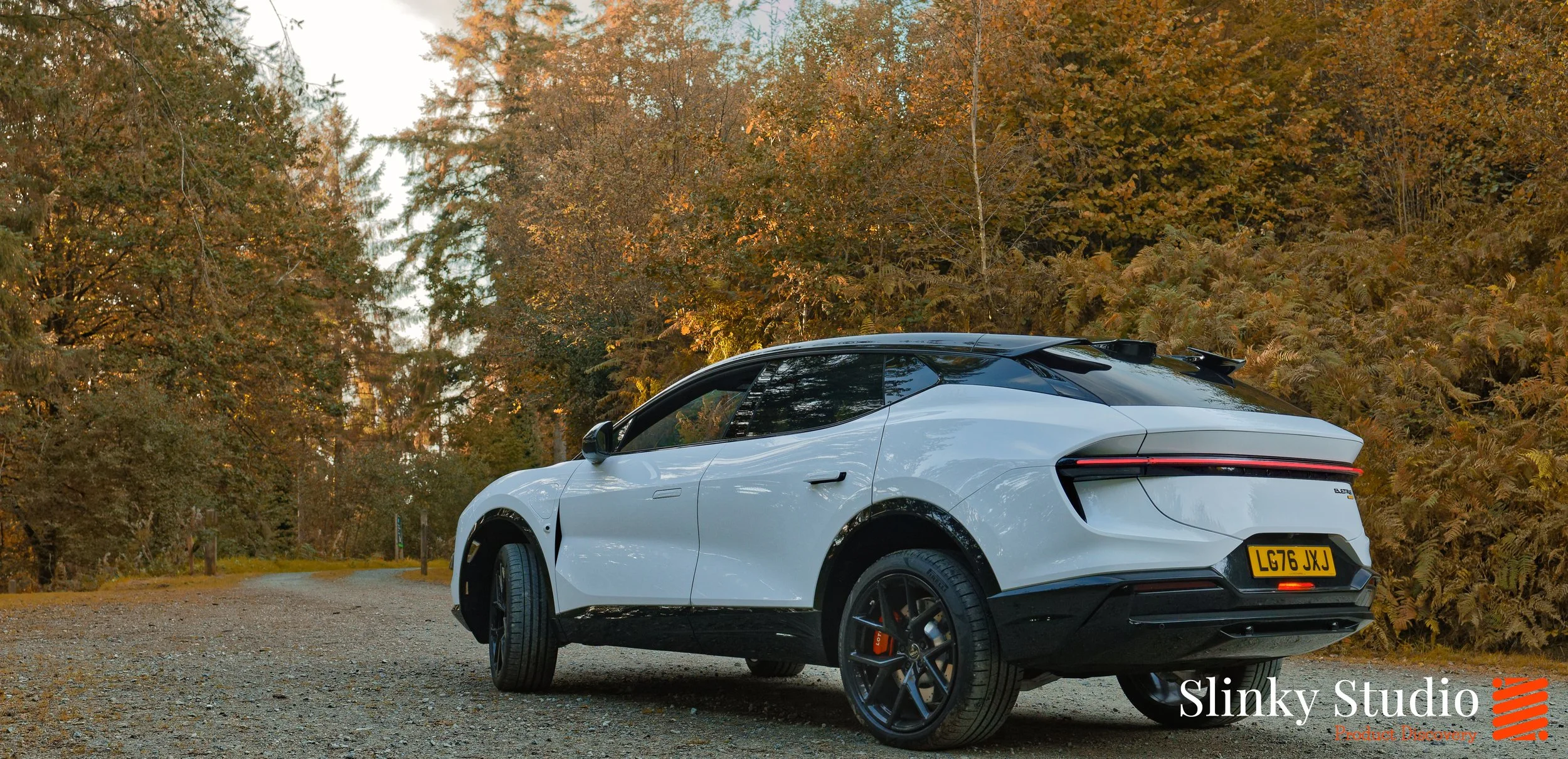
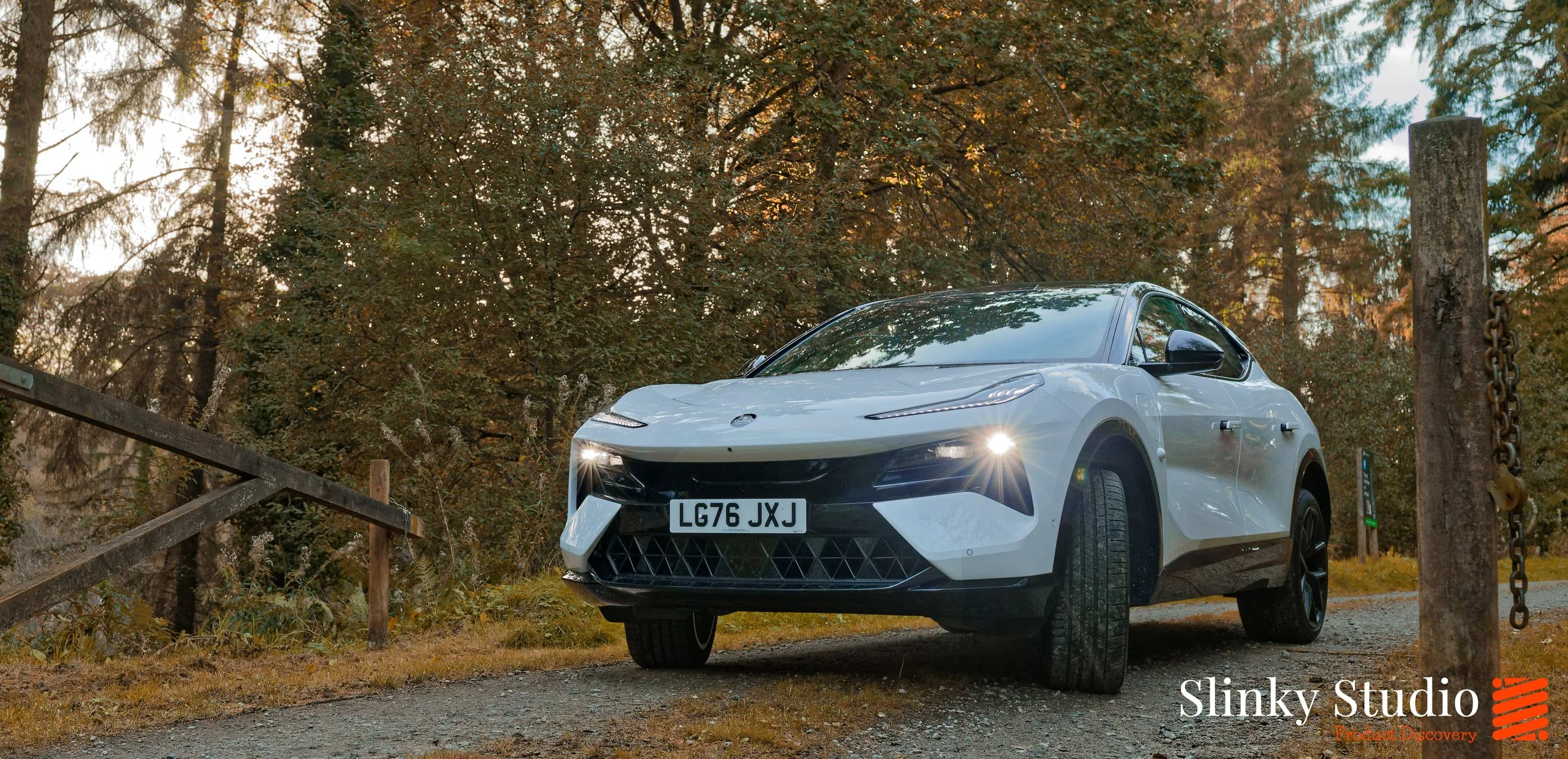
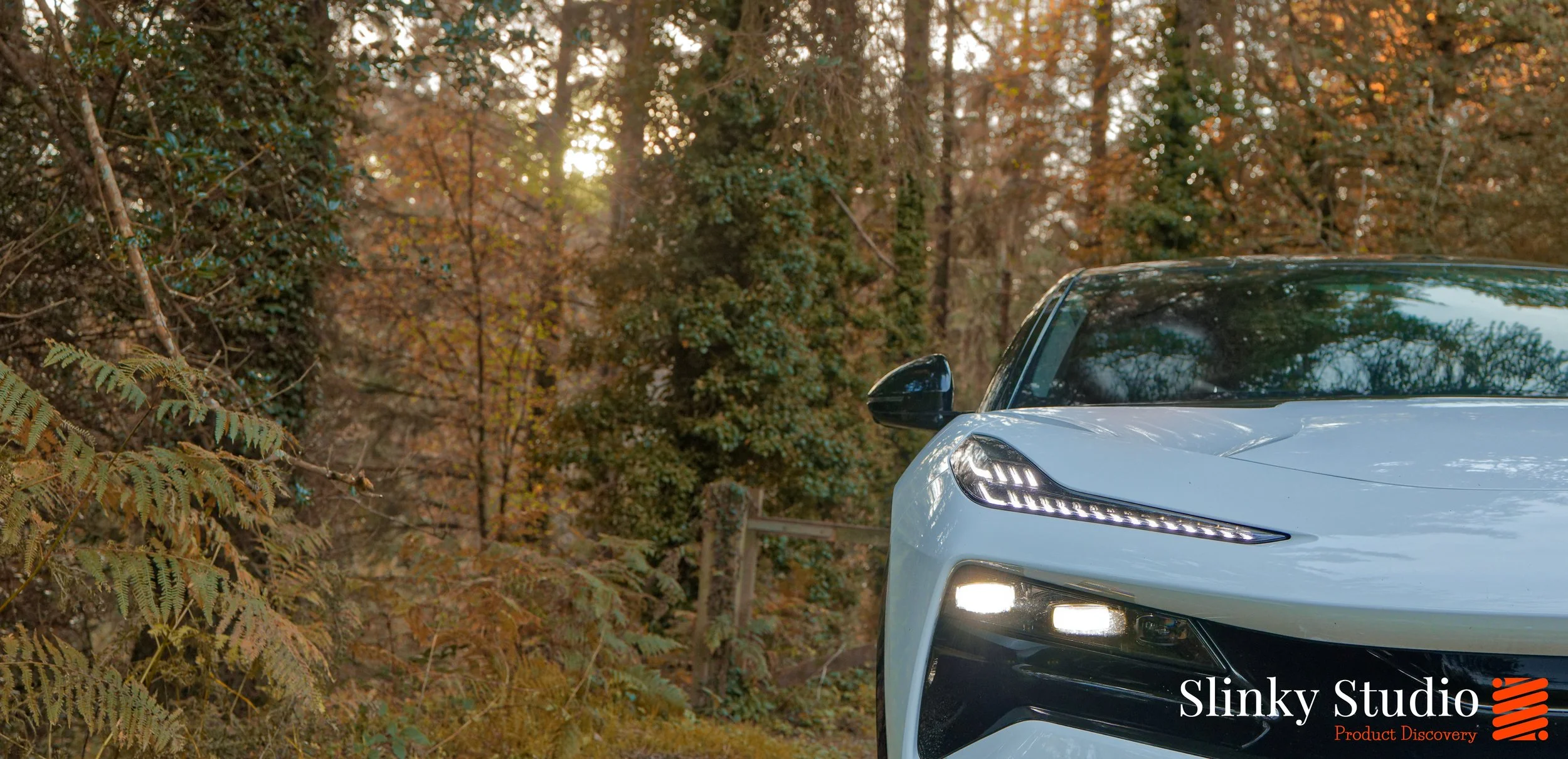
It turns out a Lotus SUV isn’t awkward, but perhaps one of the greatest SUV designs to ever be put on the road. Having a retractable spoiler and real aerodynamic air ducts (seven in fact) scooped and fed throughout the design, all of which actually serve a purpose and aren’t for show or filled-in black holes, lead the ambition of what Lotus are saying about the Eletre and how it's real.
The proportions of the Lotus Eletre feel correct. The way the glass windows, framing and door mirrors tie into the main character line is just brilliant. That line runs clean and uninterrupted from the front, sweeping along the flanks to give it a vivid sportiness that you just don't expect from an SUV of this size. It stretches 5,103 mm in length, with a massive 3,019 mm wheelbase and is 2,231mm in width, yet it hides its bulk incredibly well. Parked next to a full-size Range Rover you realise it’s bigger in every direction, yet looks smaller when apart.
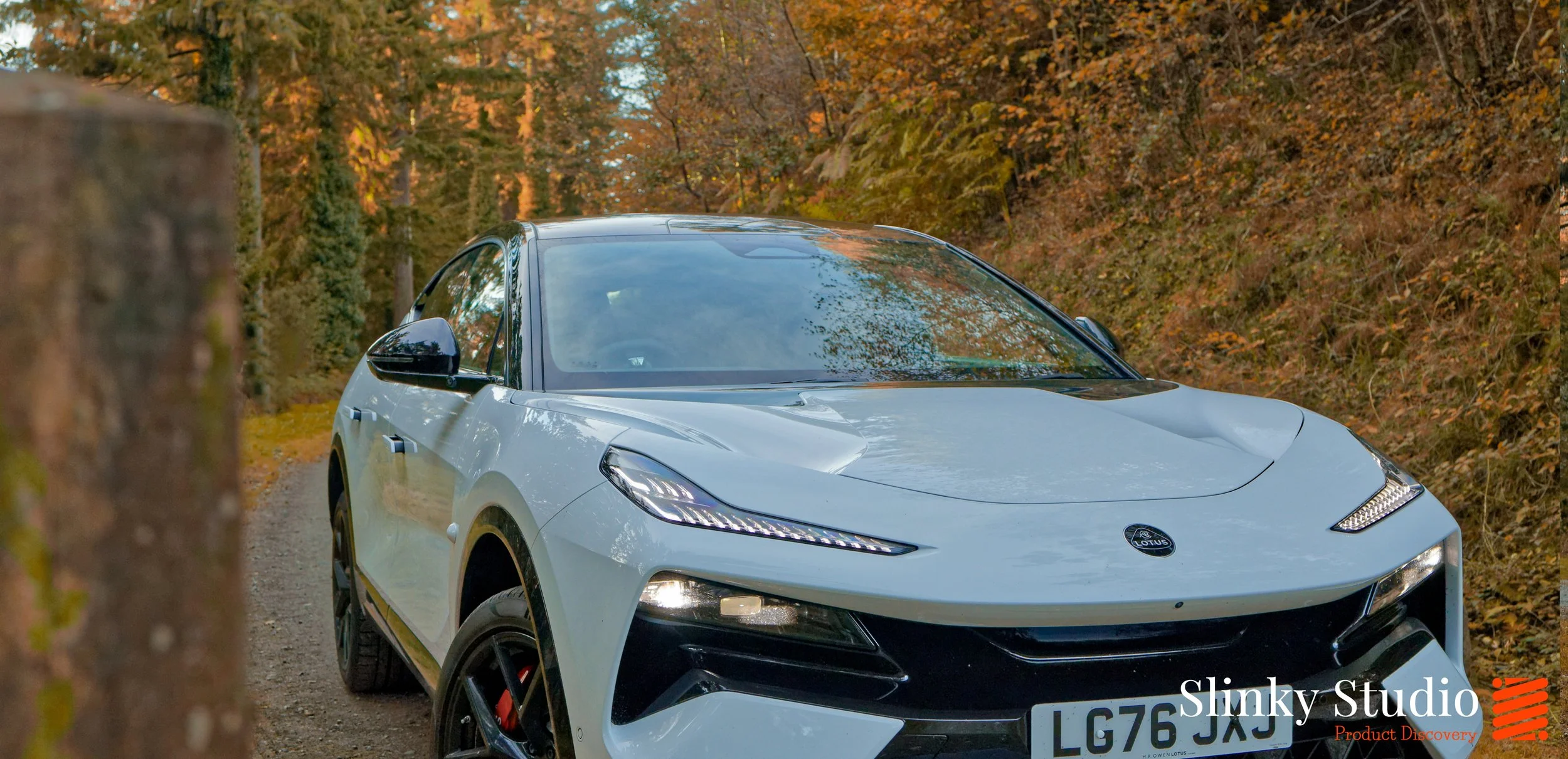
There is a real confidence in how the whole thing ties itself together visually. Trace it from nose to tail and it barely puts a foot wrong. A low, taut bonnet runs into a steeply raked windscreen, the roof arcs back and tapers into the tail, and a single clean shoulder runs through the doors into the rear haunches. It’s sporty without being fussy, with no extra creases or surface clutter. The tight glasshouse and neatly integrated mirrors keep it clean, and the result is vivid sportiness, even in a car this size. 23” alloy wheels and the bold red Lotus-branded brake callipers add theatre to what is an already masterfully sculpted machine. The rear feels like it was designed with the front, rather than as an afterthought. It’s not 'contrived', which is a good word for how some rivals look when they try to force a sporty shape onto a high-riding chassis. Thanks to the active air suspension, the ground clearance can drop down to 162 mm for a hunkered-down stance, or rise up to 225 mm when you need it.
Then there are the lights. The slim, blade-like front lights sit high on the nose, perfectly framing the aggressive, aerodynamic bonnet. At the rear, the full-width light bar acts as a visual anchor, wrapping around the corners to tie the rear haunches into the overall shape. They play a brilliant little welcome and goodbye light show every time you get in and out, adding a real sense of occasion to the daily routine.
Interior
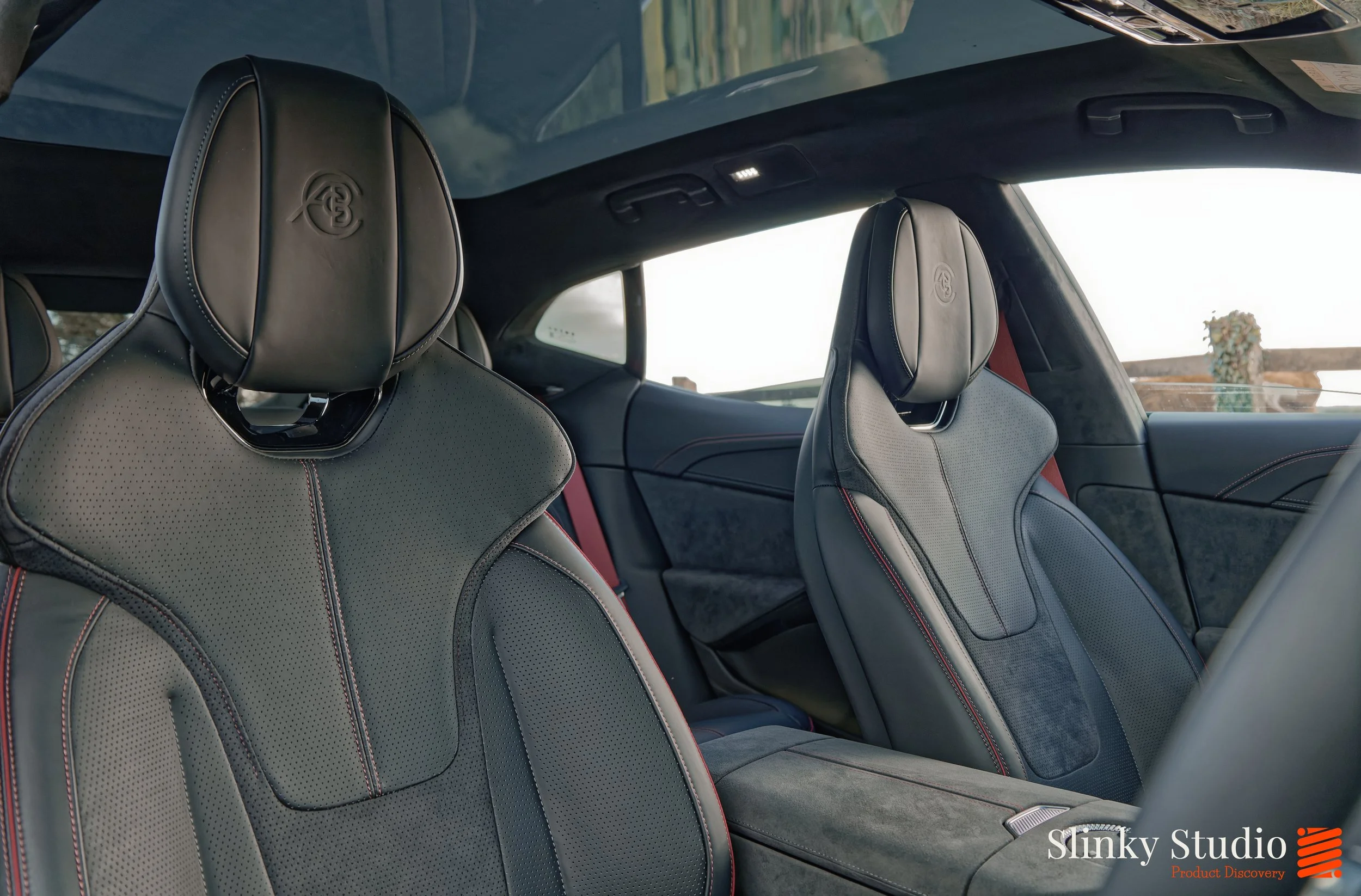
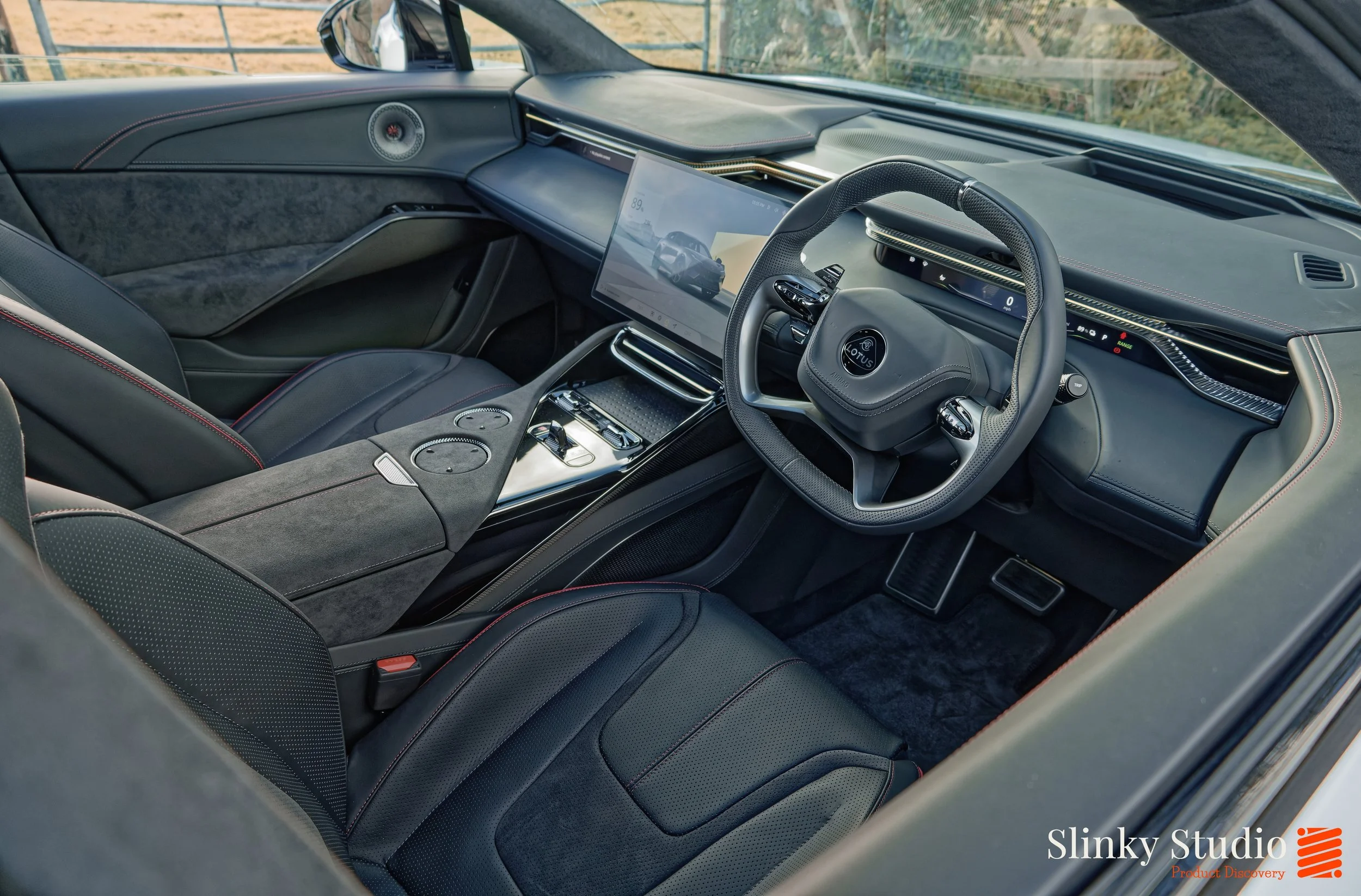
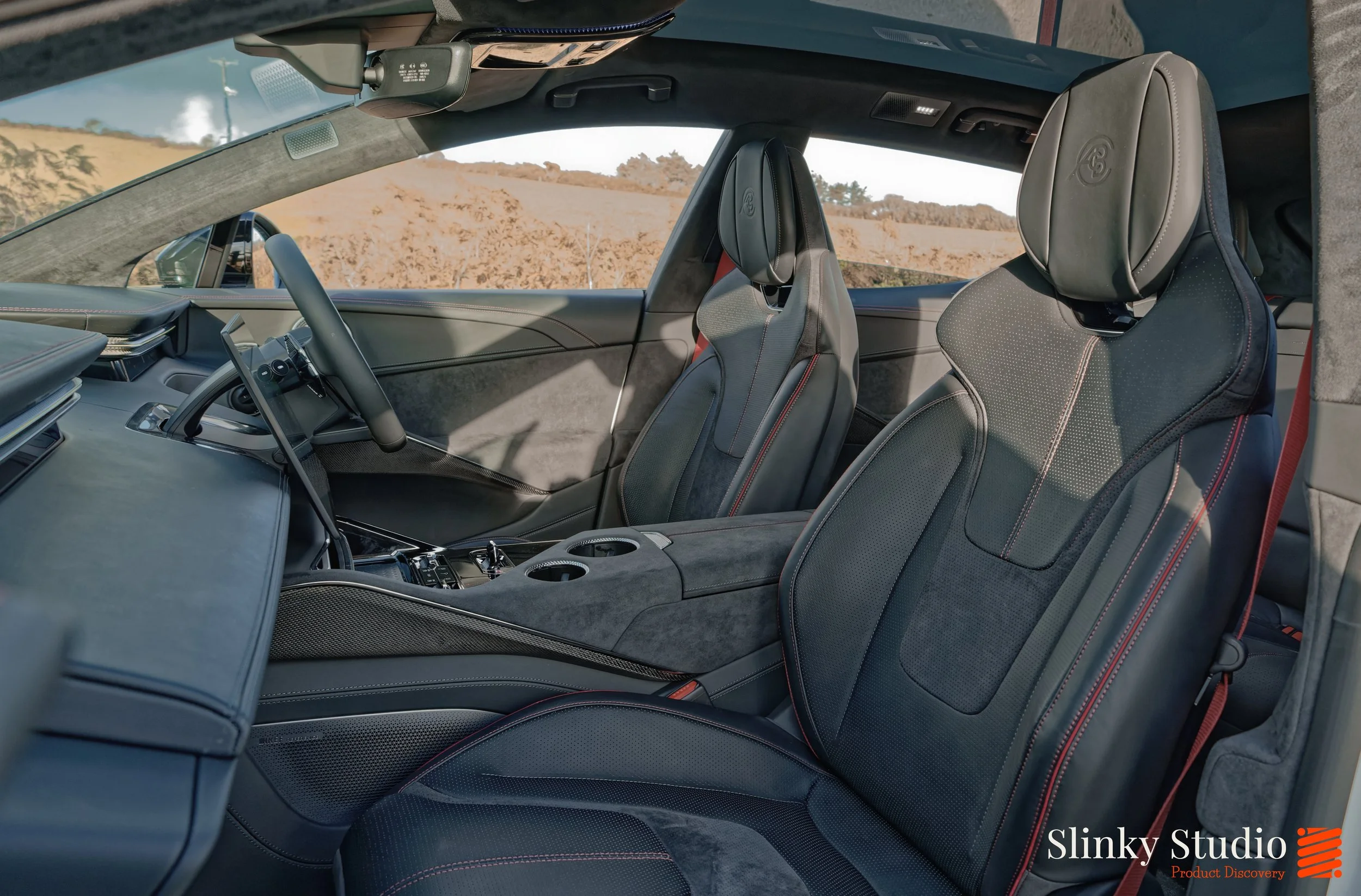
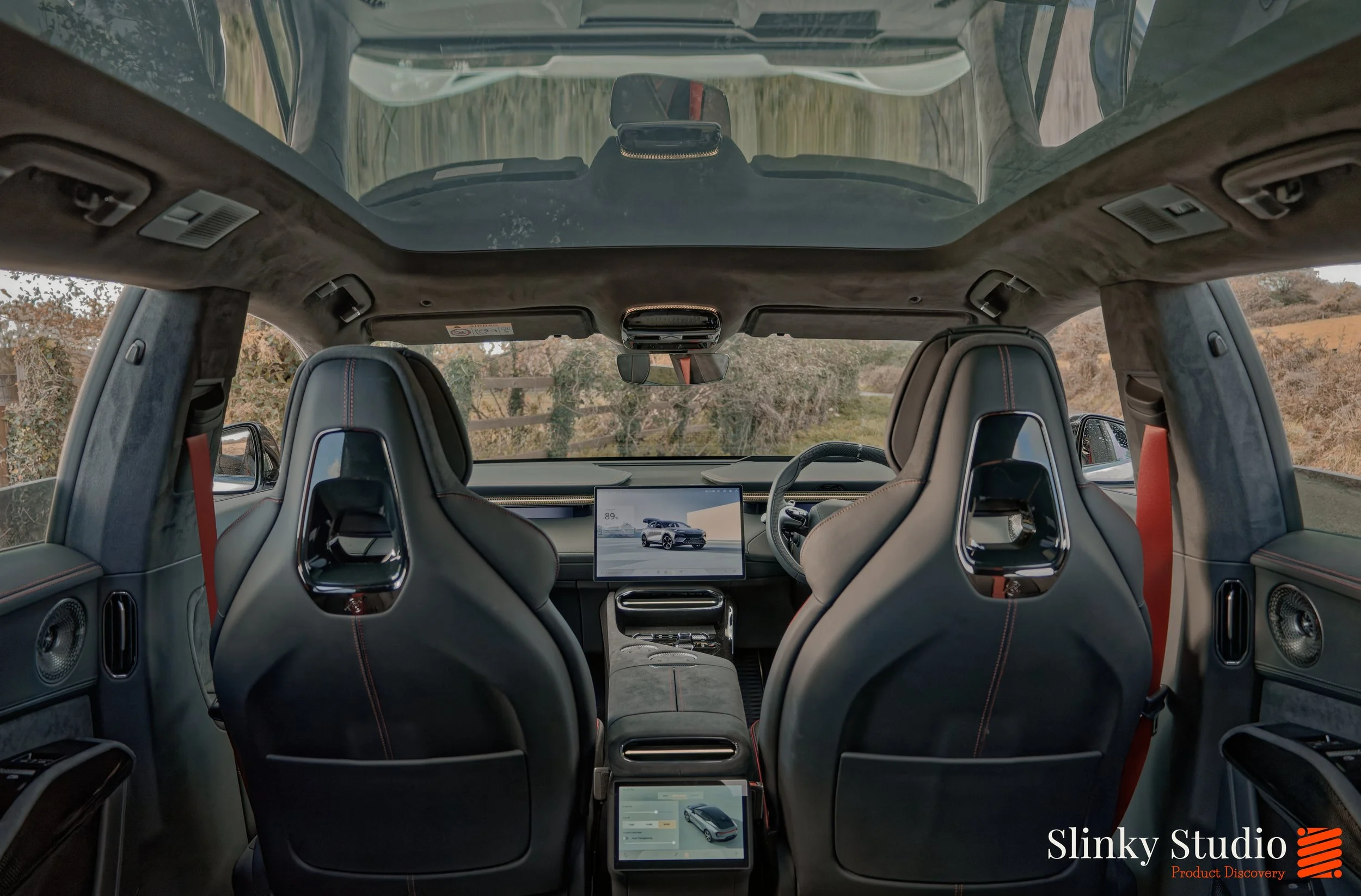
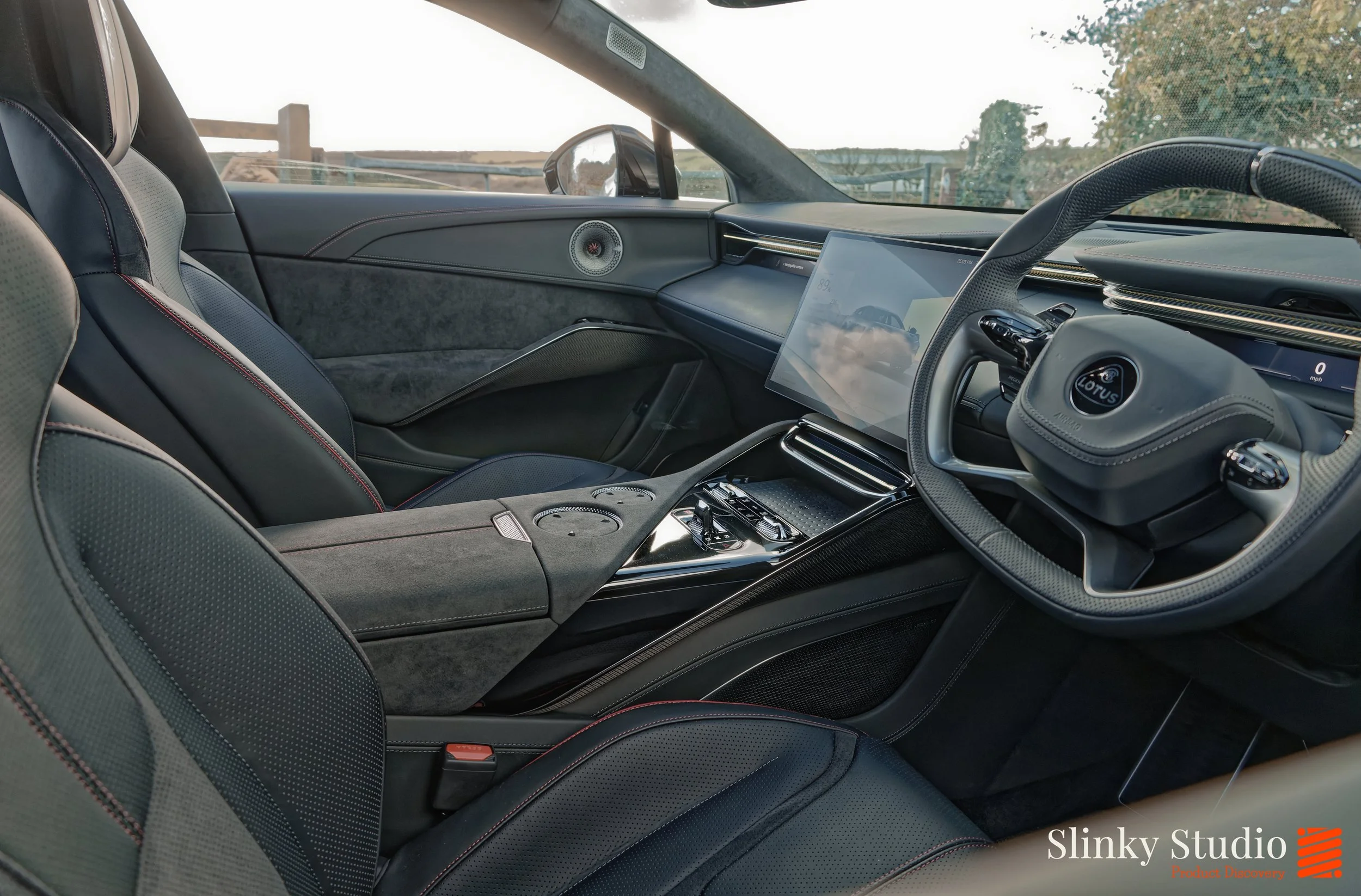
Open a door and you see that Lotus has sewn, quilted and refined the inside of the Eletre. It’s plush, swapping hard plastics for soft-touch contact points on the lower surfaces, and even the pillars are velvety. There’s a really nice mixture of microfibre upholstery and high-grade synthetic vegan leather for seating that looks and feels just like the real thing. Alcantara sits on portions of the doors and is spread over the central console, which incidentally has deep storage, a wireless phone charger, two cup holders and doubles as a nice armrest. One of the Eletre’s only quirks is those cup holders: for some reason one is narrower and didn’t really fit any standard drink size.
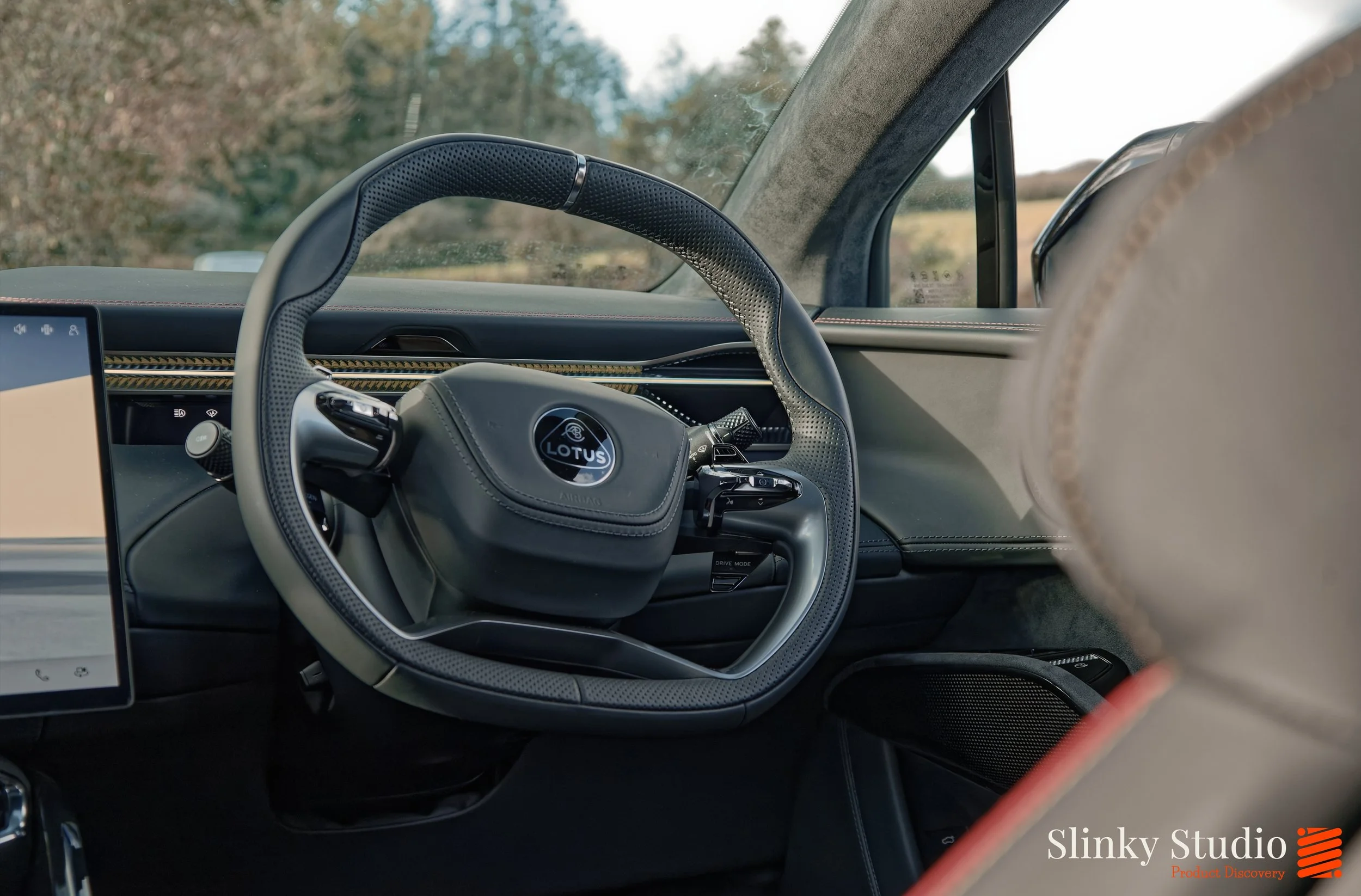
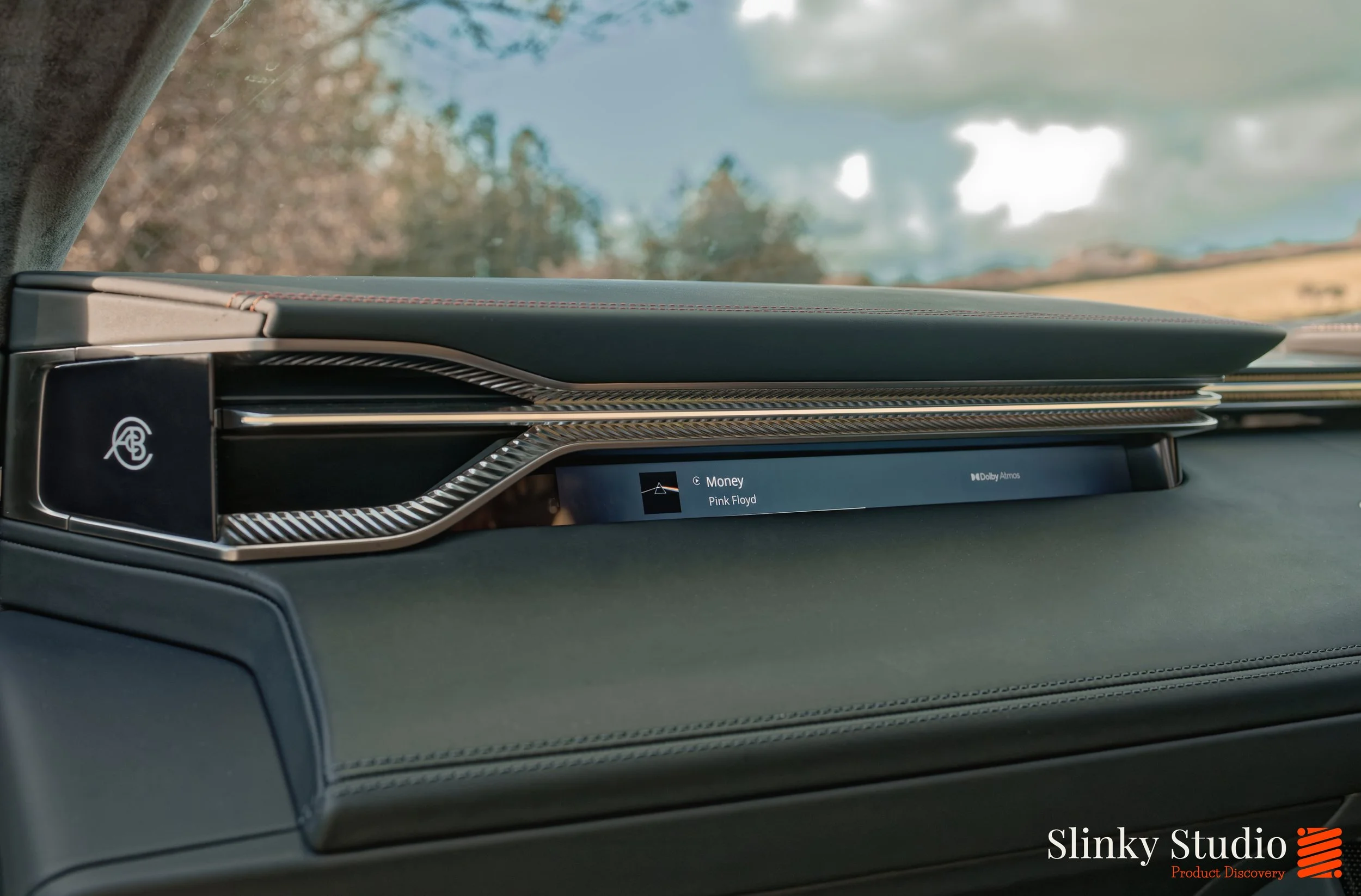
A dizzying amount of tech is buried into the design, and screens are everywhere you look. The matching driver and passenger displays, narrow yet wide at 12.9", play a nice visual symmetry, and the dash curves and wraps around the cabin to cradle both front occupants, flowing into the doors so the screens feel part of the architecture rather than tacked on. We absolutely love the way the steering wheel feels: the chunkiness, its metal buttons and the paddles behind to control regen braking and driving modes. It hints at sporty but it’s refined.
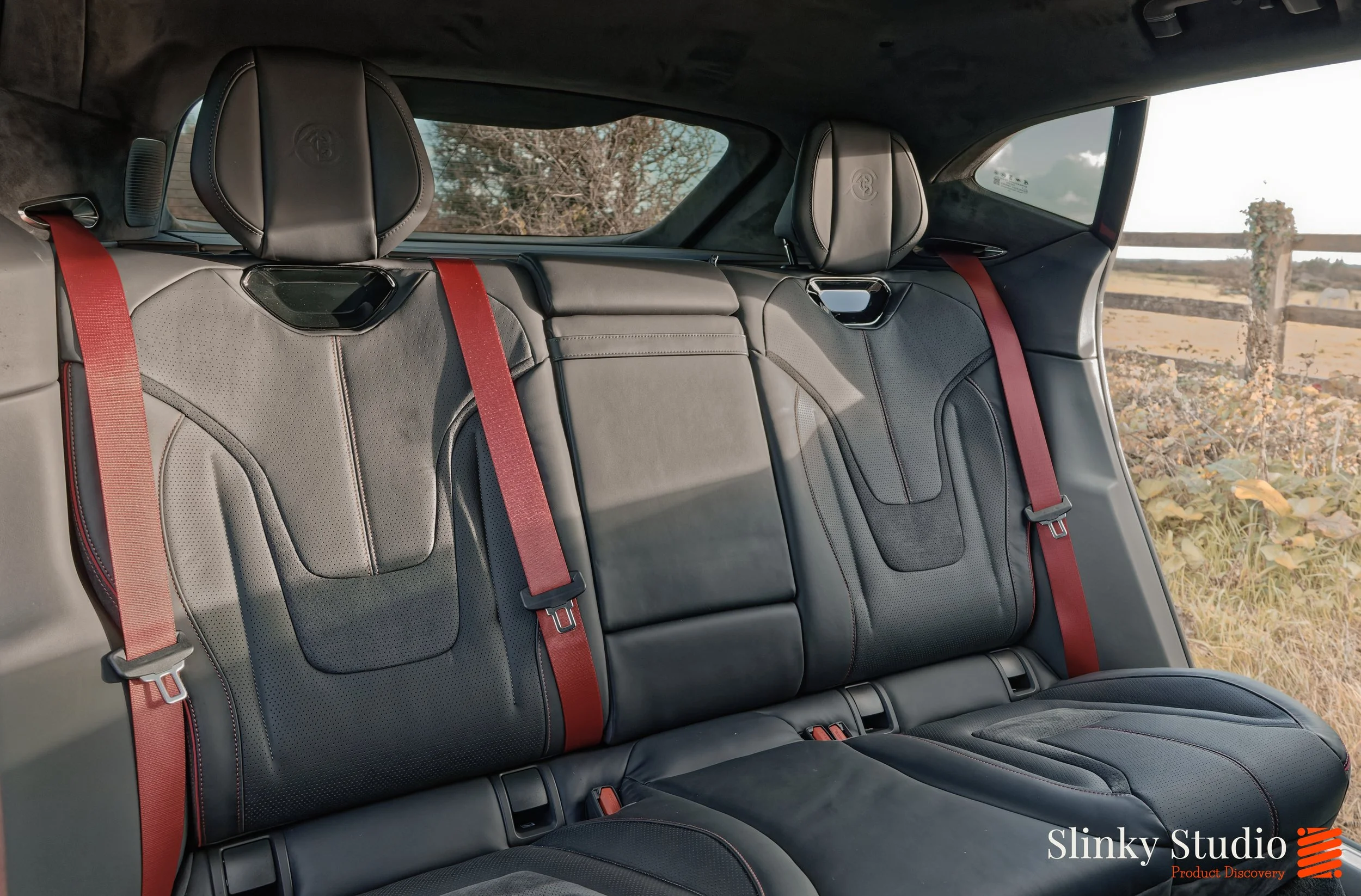
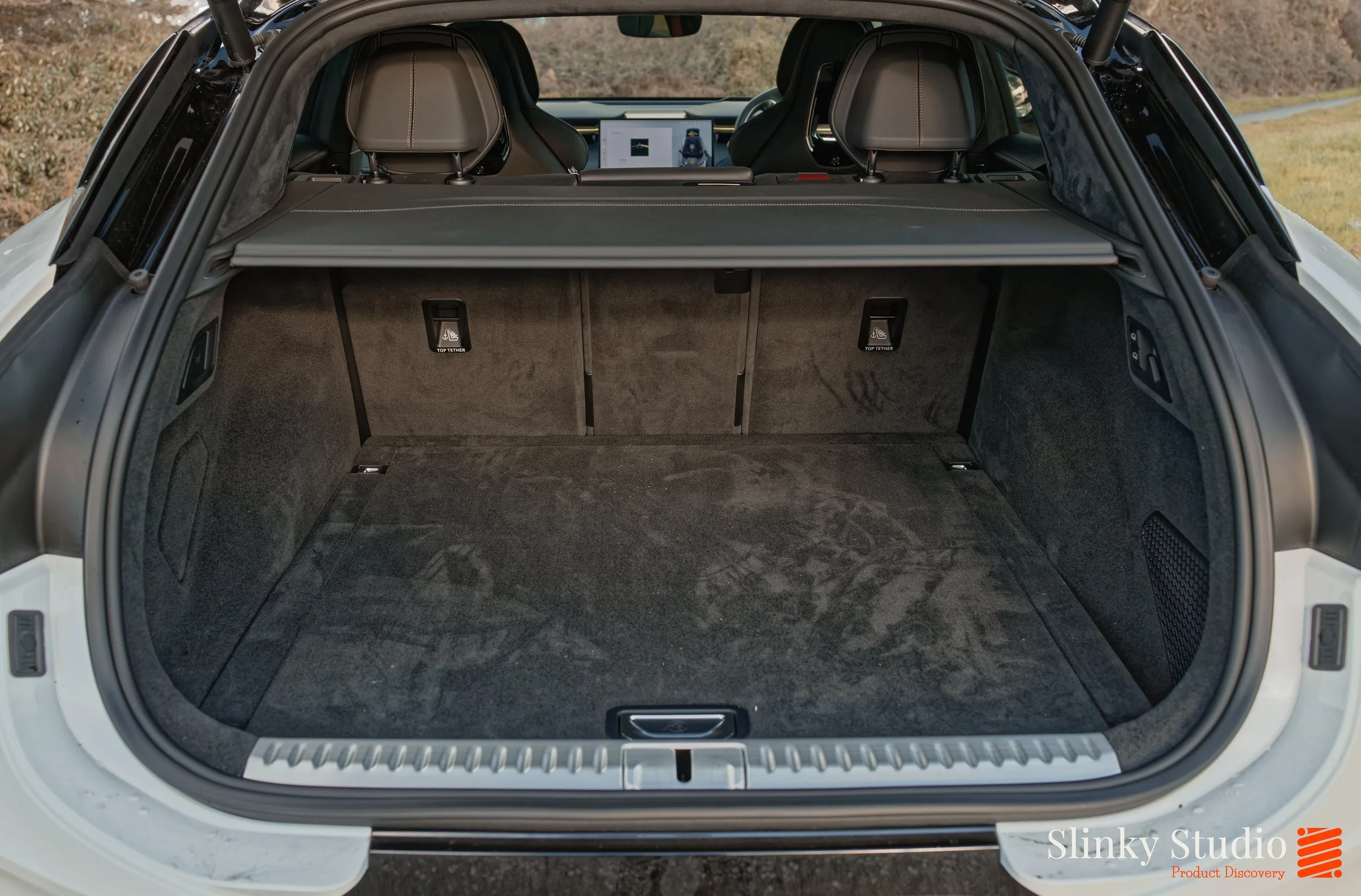
Every seat, with the exception of the rear middle, is heated and ventilated. The front pair also have massage features and are electrically 12-way adjustable, with memory function. As a driver, finding your ideal position is easily achievable, with electrically adjustable cushion extension, headrests and side bolsters. We found our spot and returned home from hours on the road, including some energised corner spurts, with no fatigue or hankering to get out. It’s a really easy place to be; you feel locked in and the passenger seats front and back offer similar comfort on long journeys. Rear passengers are treated to a gluttonous amount of legroom; it’s leg-splaying territory, and in some ways the rear is the best place for soaking up the views through glass at all angles. Back here you also have reasonable door storage, and a rear central armrest reveals a storage cubby along with two cup holders that deploy with a very pleasing action.
Everywhere you look and feel, it’s evident that thoughtfulness has gone into the material choices and how they mingle together. The atmosphere of the Eletre is one of athletic luxury. It’s not ostentatious, but it’s a much more premium place to be than its German electric rivals. It’s similar to the Polestar 3 in being airy and spacious, but the Lotus leads on quality of materials and general fit and finish.
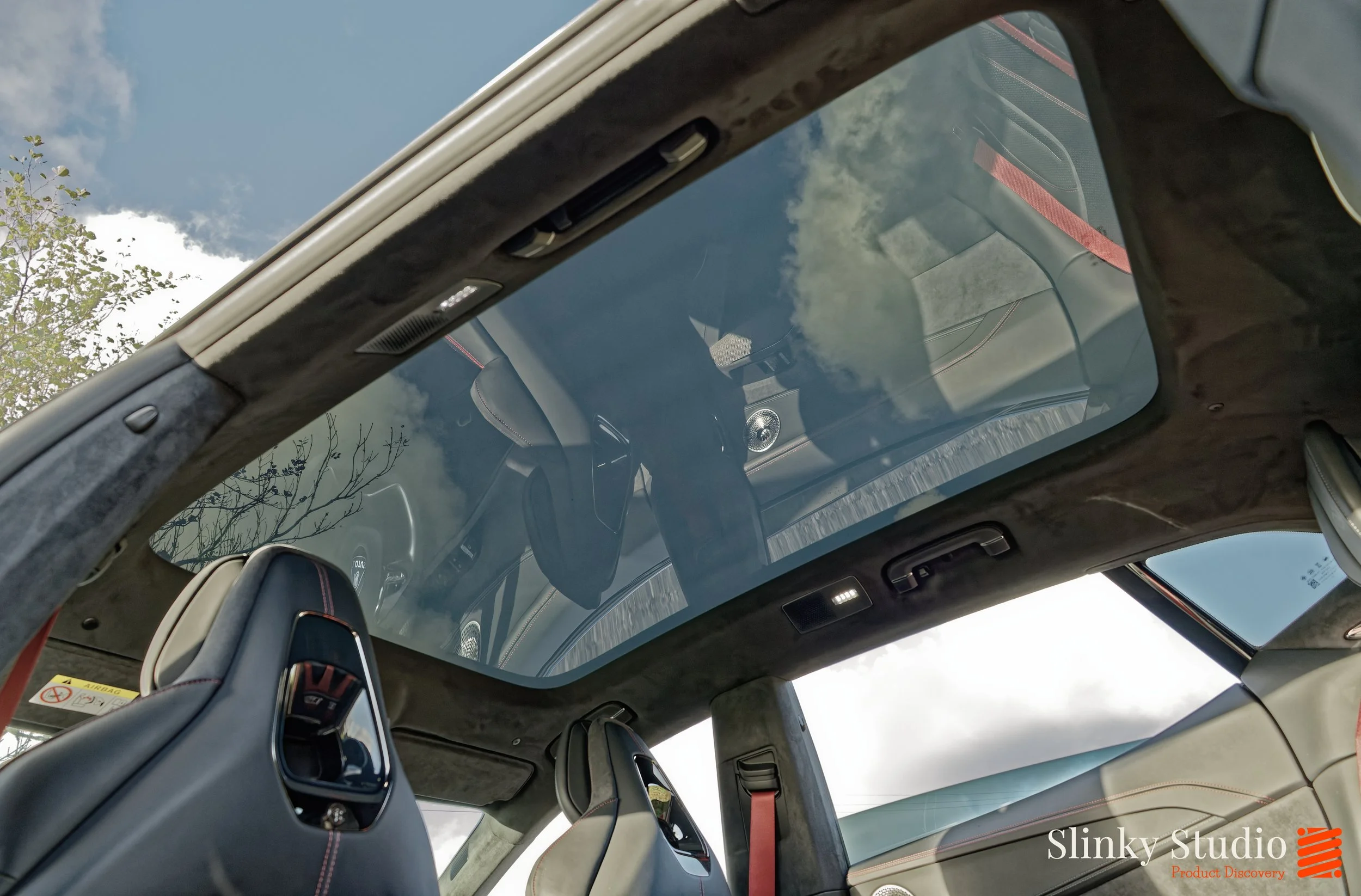
We’d probably go for a lighter interior hue like Quartz, but the Jasper black here isn’t cave-like inside, and the red contrast stitching and seatbelts are a nice touch that make things a bit more interesting. There’s also a nice amount of natural light from the panoramic roof (which can go opaque) to illuminate the cabin in the day, and at night the ambient lighting glows in 64 colours of your choosing, wrapping around the doors and front.
Tech and the many displays
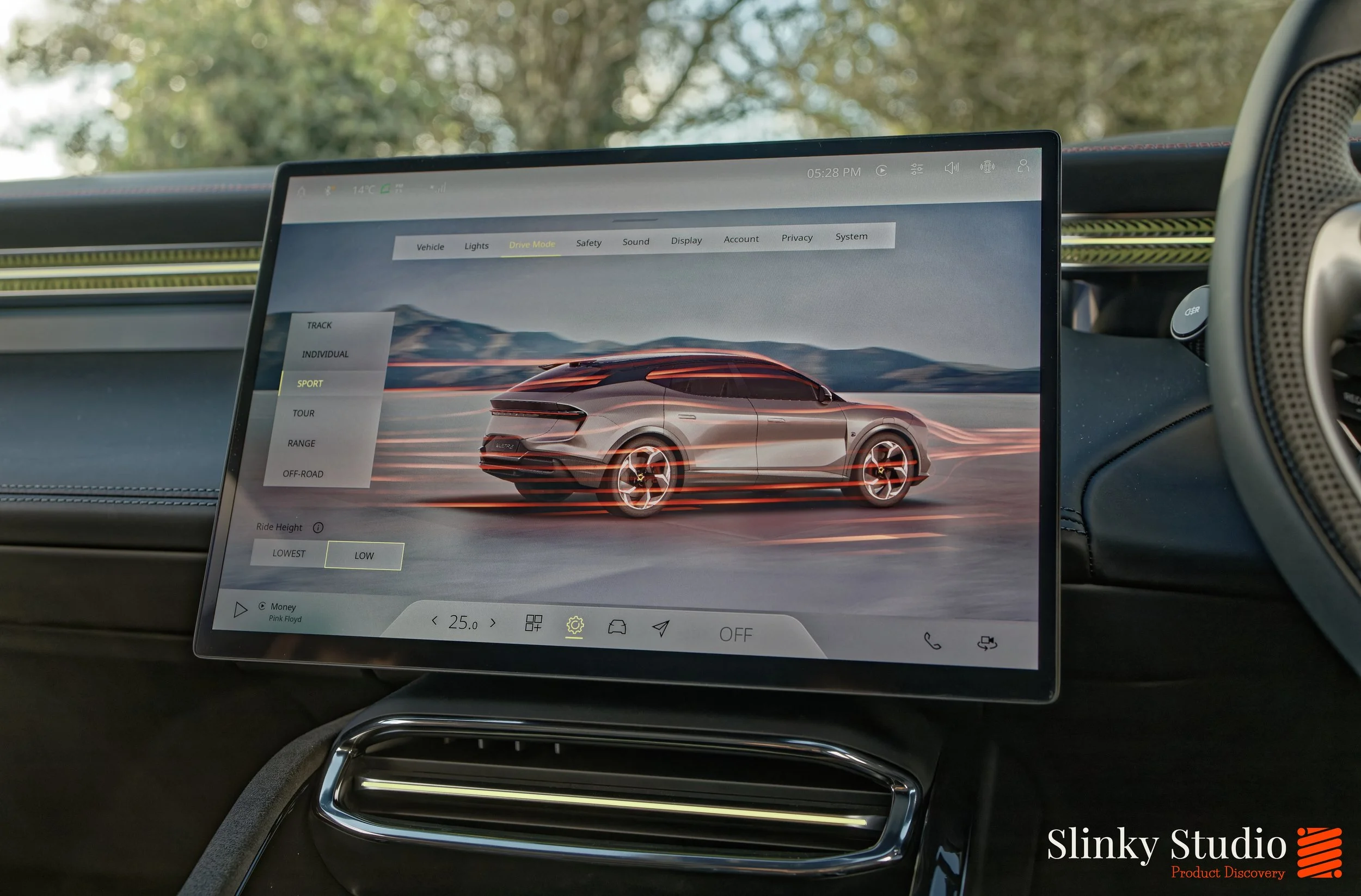
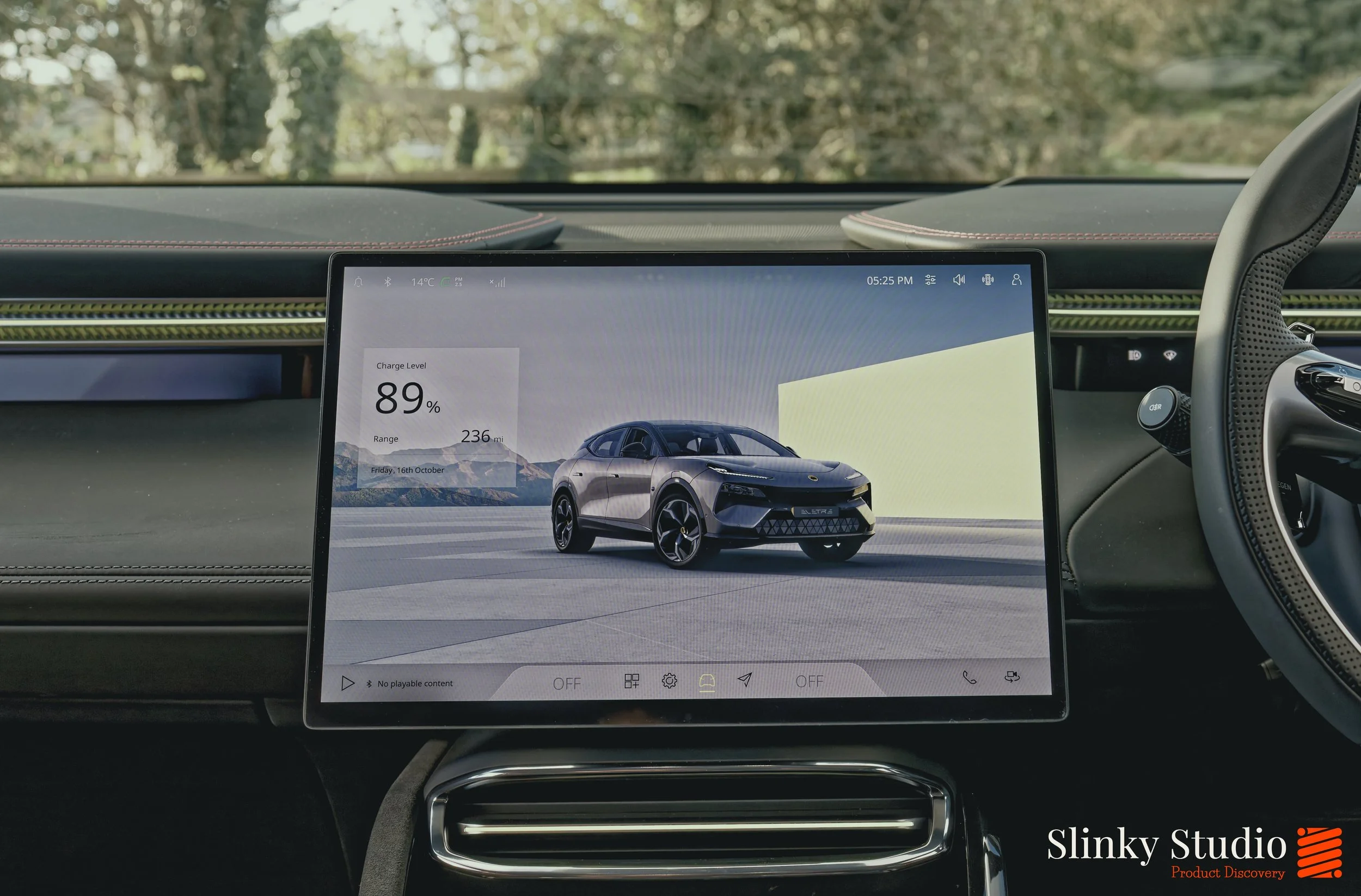
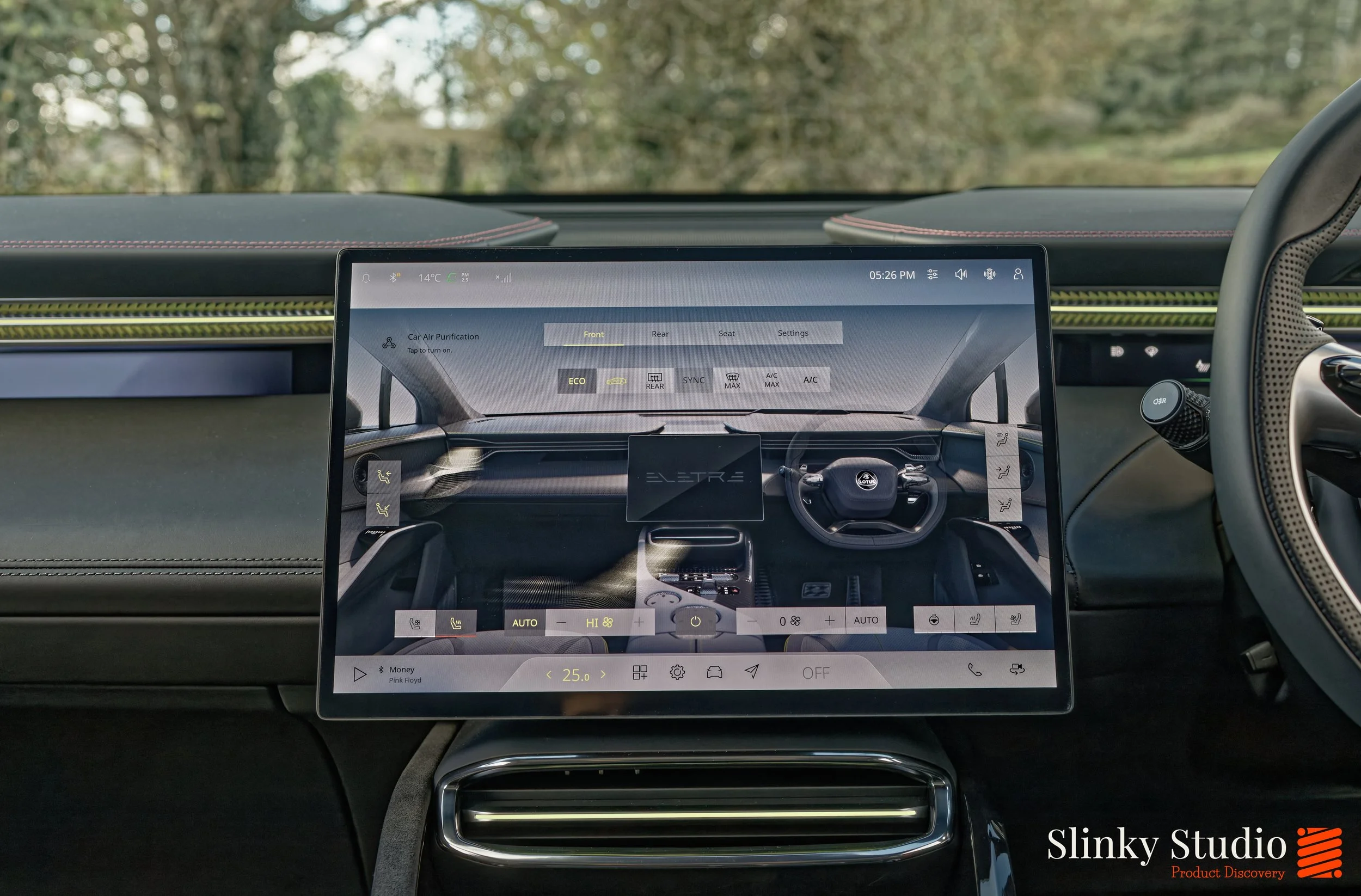
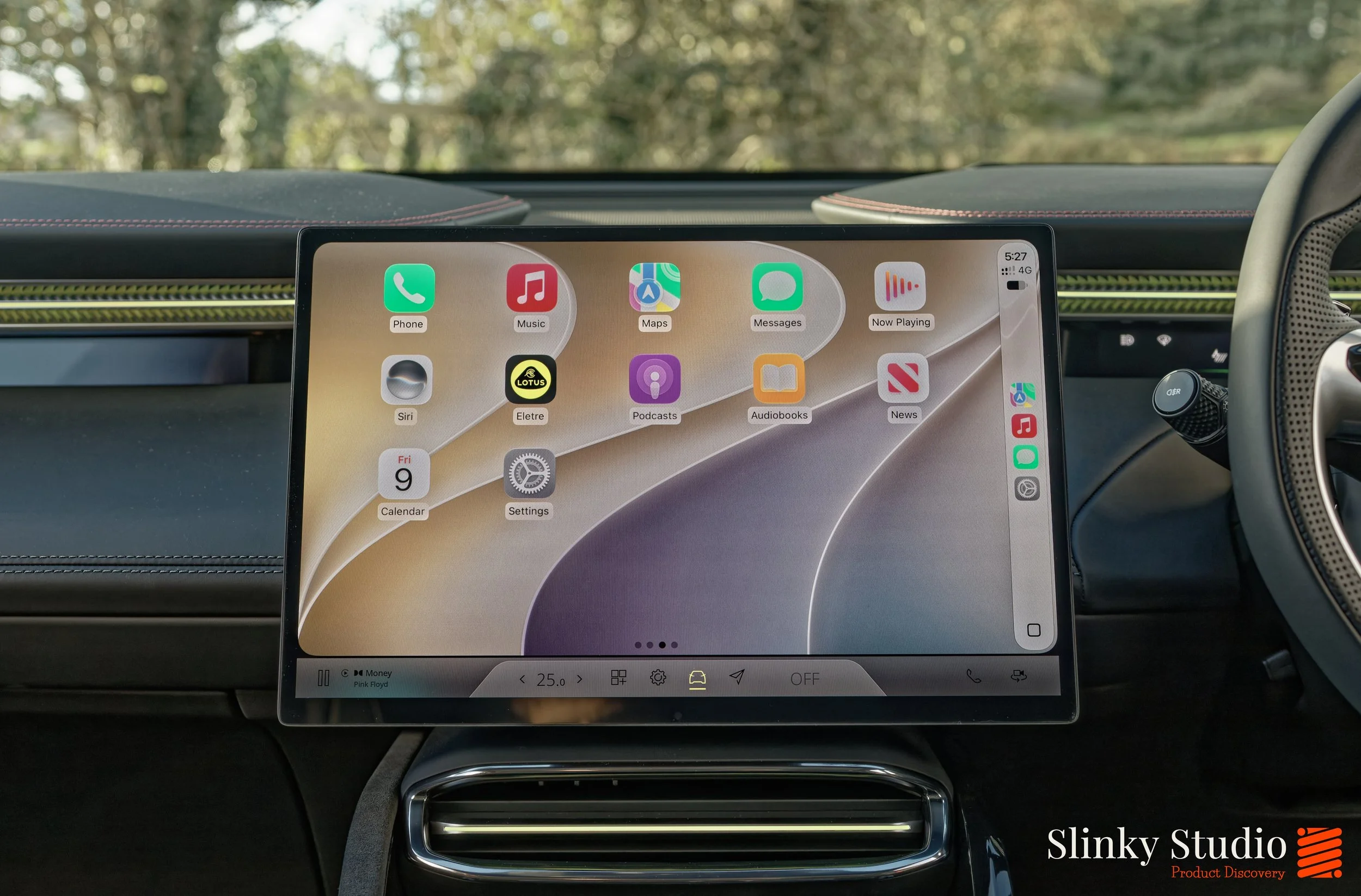
It’s a very familiar environment to the Lotus Emeya: cabin layout, seat design and all the switches and controls. This is in no way a bad thing; we really liked the Emeya’s layout and found it easy to live with. A nice blend of digital and physical controls when it came to the climate controls, for instance: it’s touch-based for the fan direction, but speed and temperature can be adjusted with physical metal switches. Its 15.1-inch 120Hz OLED massive central touchscreen display is the command centre for most things and is superb; the Lotus Hyper OS that runs everything is fluid and orchestrates a positive experience. The only downside to all this is the app store, which in theory could have a plethora of useful additions, but there’s only a handful of things to currently download. Nevertheless, there is wireless Apple CarPlay and Android Auto, which add masses of additional functionality anyway, and this we used most of the time.
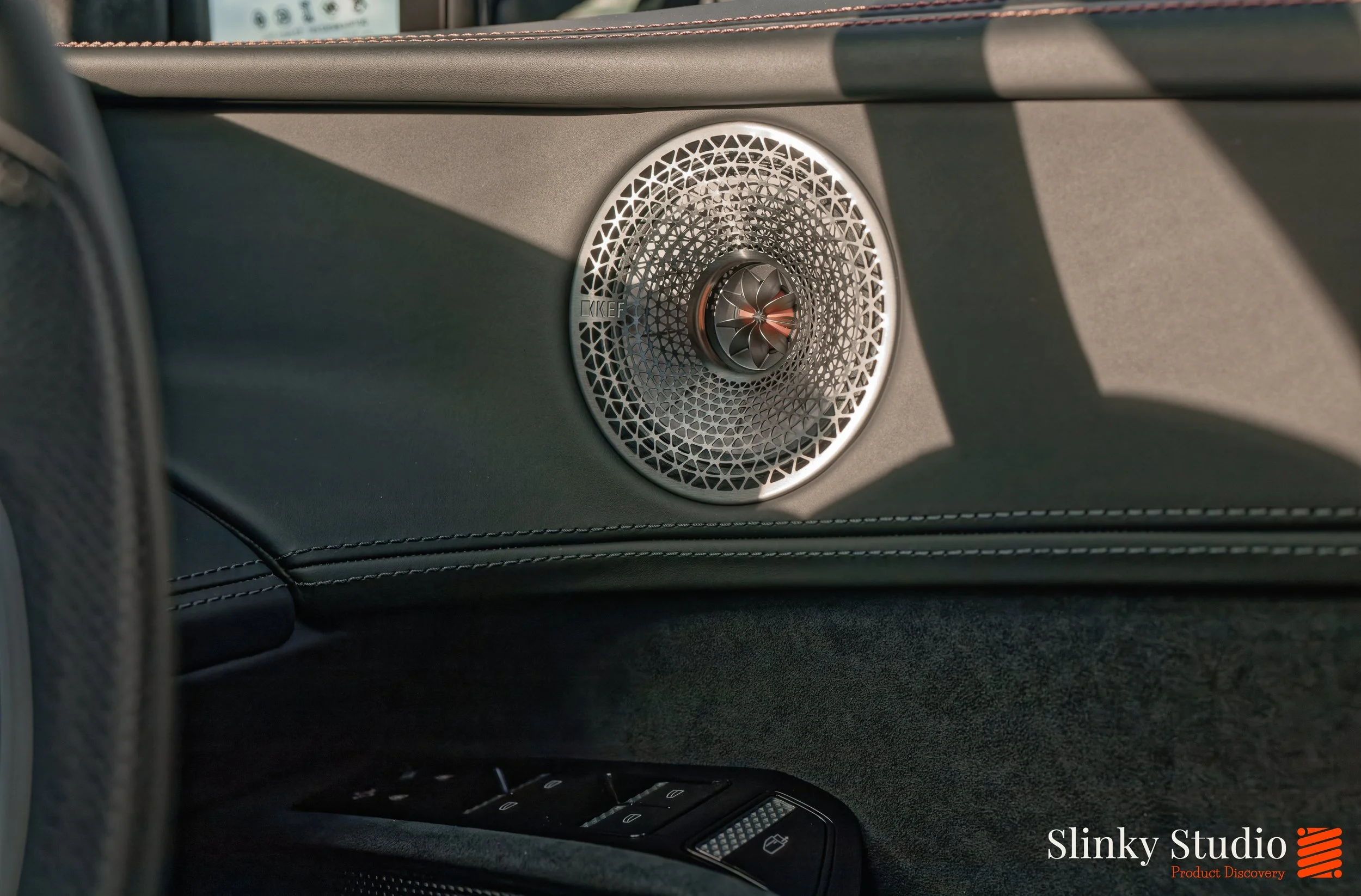
The 2,160W KEF 23 speaker system is another highlight; we’d sit it up there amongst the best, with the Genesis GV60’s Bang & Olufsen system and Polestar 3 Bowers & Wilkins set-up. It delivers what feels like a genuine surround-sound experience rather than simply filling the cabin with music. Audio is remarkably well distributed, creating an immersive soundstage that feels equally present throughout the cabin. Importantly, this isn't a system that favours those sitting up front; rear passengers enjoy much the same clarity, presence and depth, so nobody feels like they're getting the lesser listening experience.
There are three other displays: two at the front, one for the passenger, a 12.6-inch touchscreen, neatly incorporated into the dashboard and positioned within easy reach. It provides convenient access to music and radio controls, meaning there's no need to lean across to the main infotainment display every time they want to change a track or adjust the volume. Another identical non-touchscreen sits in front of the driver, displaying speed, range numbers, trip details, etc. Although the head-up display is arguably more useful, projecting speed, navigation instructions, map information and live traffic onto the windscreen, keeping the most useful information within the natural field of vision. It does the job well, although the graphics have a slight softness and glow to the projection and aren't quite as sharp as other systems we’ve used.
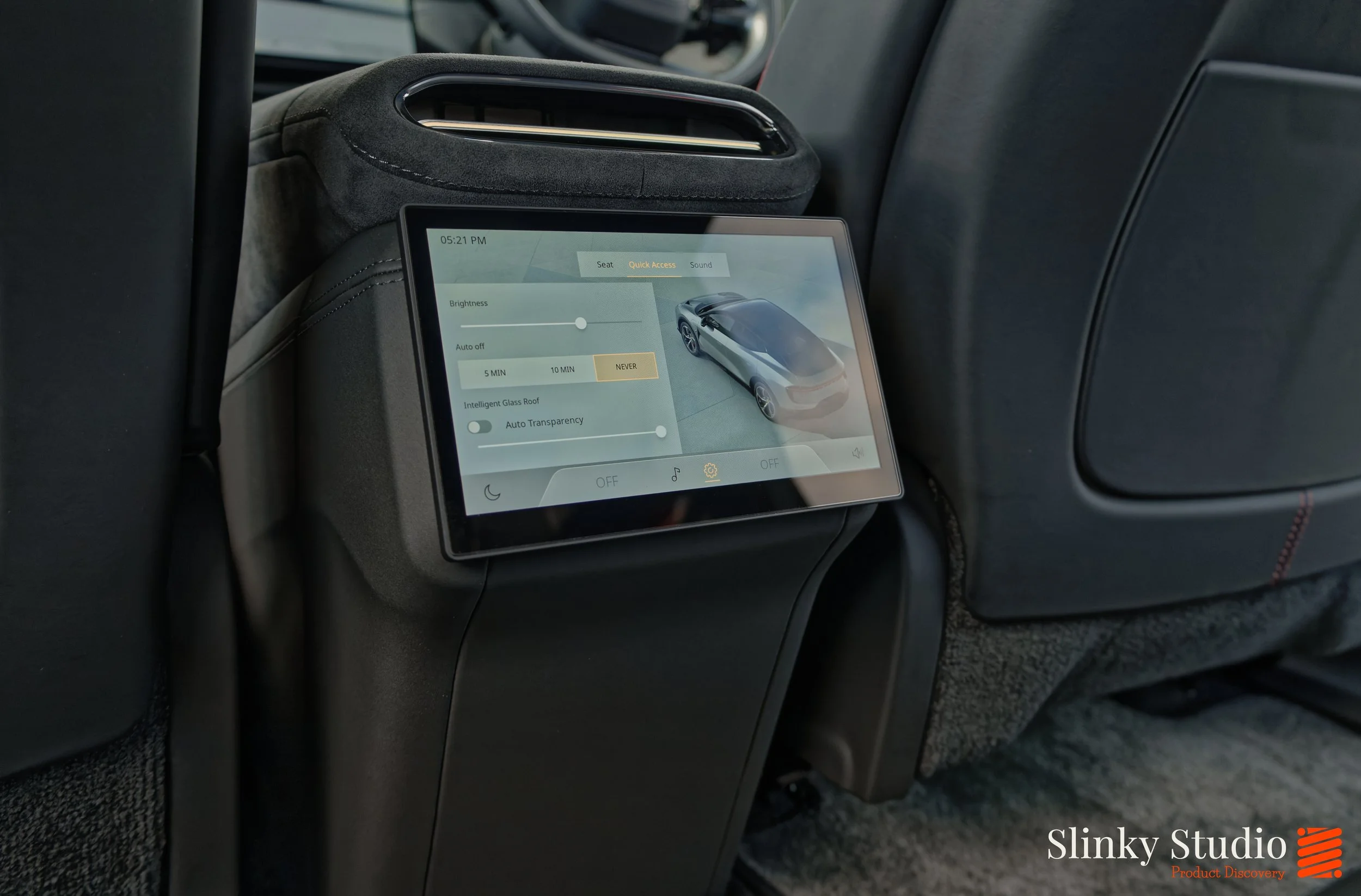
There's still one remaining display, which is located in the rear. It’s an angled touchscreen that lets passengers control their own climate, panoramic glass room opacity, adjust their heated and ventilated seats, and even fiddle with the media playback. Everyone who has sat back there has exclaimed how good it is, giving the second row a proper executive, first-class feel.
Charging and Range
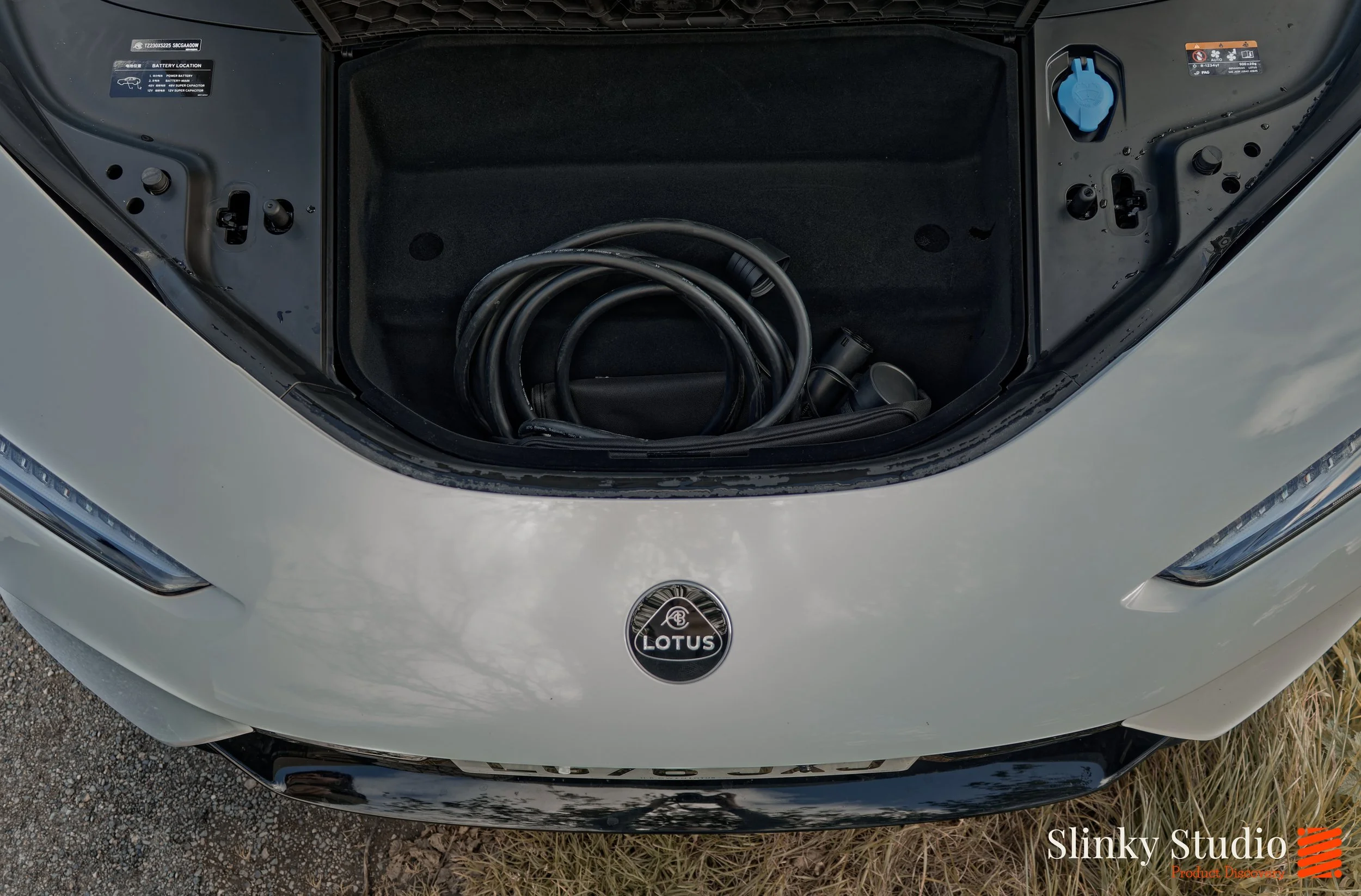
If you need to charge en route the Lotus Eletre is a speedy one, when at a suitable charger, due to its 800V architecture. So it can be done in as little as 20 minutes, taking the battery from 10 to 80 per cent if you hook it up to a rapid 350kW DC charger.
At home, on a 7.4kW wallbox charger, it will take around 17 and a half hours to charge from empty and costs us less than £8, though realistically you'll just be topping it up overnight. If you're lucky enough to have a three-phase 22kW setup at home, the Eletre's onboard AC charger can handle that too, dropping the full charge time down to just under six hours.
Range numbers are a bit of a pest to calculate, as we’ve been wiggling between driving modes and all within a real mixture of driving, featuring 70 mph cruising, country lane hobbling and some off-road woodland trekking. All in all, this blended activity came to an efficiency of around 2.4 miles per kWh, which translates to a real-world range of roughly 260 miles on a full charge, not quite the official 373-mile WLTP figure, but entirely respectable given the sheer size and performance of this thing. If you were to hypermile it, stick to eco mode; it would seem likely an additional 40–50 miles could be drawn out.
The Drive – Not what you expect
There’s a junction near us that defeats plenty of cars. It’s a true 90-degree turn, on a hill, and it usually means a panicked reverse halfway round. In the Lotus Eletre, we just drove out of it. That’s the most confusing thing about this car: at 2,231mm it’s by far the widest we’ve driven, yet it drives like something much smaller. Its turning circle is 11 metres, basically a tie with a MINI Cooper. Additionally, ride height, pillar placement and glass give good visibility, and the seating position is commanding without being bolt upright, as the whole car feels like it leans back, hinting at a sporty attitude.
All of that means we could feel exactly this car’s placement on the road with ease; so passing tractors on the narrow country lanes around Cornwall or nipping through towns with parked cars scattered along the sides didn’t require a second thought. The Polestar 3 made us hesitate over its width on occasion; the Lotus Eletre didn’t raise our anxiety levels. Yes, it has all the cameras, all of excellent clarity incidentally, but we didn’t find ourselves needing them as much as we would have anticipated.
A lot of the above can be attributed to the steering, which is utterly literal, with no vagueness at lower speeds, and it has a 4-wheel steering system meaning we have automatic rear-wheel steering available all the time. It really helps to achieve easy parallel parking against kerbs and makes getting squarely into bays a doddle, although the auto park feature does a good job too and is human-like in pace.
Travelling at 70 mph (which feels about 35–40 mph in this, we’re not joking) is something the Eletre does masterfully. It's so smooth when placed into Tour mode, it just floats along, keeping all passengers rested at the other end. Its air suspension set-up, double glazing and insulation cocoon you into what is a very quiet cabin given the size of this SUV. The regenerative braking is smooth and easy to modulate with the metal paddles on the steering wheel, but it won’t bring the car to a complete stop on its own, so you’ll need a dab on the brake pedal to finish the job.
But sneak into the driver's seat alone, wiggle it into Sport mode, and you'll be jolted into a world of real performance in this Lotus Eletre 900 Sport. We had made the judgement that the Polestar 3 (performance spec) had pretty much mastered the large electric SUV format when it came to performance and handling. It turns out we were wrong. To begin with, the Eletre 900 Sport is one of the world's fastest SUVs, with 900bhp and 985Nm (727lb-ft) of torque, so vast that we certainly never came close to exploring its limits. Acceleration goes beyond simply throwing you back into your seat; there's a genuine head rush every time you dare to push the throttle to the floor. With a 0–60mph time of just 2.95 seconds, it's quite incredible to experience from behind the wheel of something this substantial.
It’s from here that the Eletre’s Lotus heritage really pulls through. A few months ago, we were driving the Lotus Emeya around Cornwall, a grand tourer that seriously impressed us. Lotus has somehow managed to carry some of that car's charming dynamic character into the Eletre and there’s a genuine sports-car character running through its dynamics. It’s not simply a case of making a powerful SUV go quickly in a straight line. The steering, chassis, suspension and all the electrical wizardry work together to make it feel involving. You see, unlike many electric SUVs, where the steering feels disconnected from what’s happening beneath the wheels, the Eletre feeds a surprising amount of road feedback into your hands. It’s neither numb nor artificially weighted in feel, and it stays precise and consistent as the speed builds, which is particularly reassuring through faster corners.
In the more focused driving modes, the Eletre lowers itself towards the road, giving it a purposeful stance and a tighter, more disciplined feel through corners. Body lean is remarkably well in check, with none of the wallowing you might expect from an SUV of this size, yet it never becomes harsh or unforgiving. We always felt there was enough compliance to make it enjoyable rather than exhausting. Raise the suspension and push on a little harder and you can begin to detect some body roll, but it remains impressively composed, with a real sense of control over the car’s movements rather than the suspension simply trying to contain its considerable weight.
We did get a chance to take the Eletre off-road through a woodland, and whilst the inclines were very steep at times, the overall surface was fairly dry so not too much of a challenge. The adjustable ground clearance made clearing tree branches and dirt humps easy though, and we never experienced any loss of traction. It simply floated over the rough stuff without a fuss.
Verdict
The Lotus Eletre somehow contorts athleticism, comfort and practicality into one rather remarkable package. It's easily the best SUV we've driven. Its ability of handling the road is unmatched in its class, but what's perhaps more surprising is just how effortlessly it goes about everyday driving. We've spent two weeks threading it through tight Cornish lanes, negotiating awkward junctions and squeezing past oncoming traffic in what is the widest car we've ever driven, yet it has felt almost dainty in the process. That's quite an achievement.
It also makes you question why so many large SUVs feel unnecessarily cumbersome. The Eletre demonstrates that size doesn't have to come at the expense of agility, that performance doesn't need to compromise comfort, and that a large format car can be genuinely involving. One moment it's wafting along at motorway speeds in near silence, keeping everyone comfortable with all the modern luxuries, with generous space, a beautifully finished cabin, technology in abundance and enough range to make longer journeys entirely practical. Next it’s showing its mischievous side, waiting for the moment you find an empty stretch of road and decide to explore what all that Lotus engineering can do. Delivering the sort of endless performance and cornering ability that would leave plenty of dedicated sports cars with something to think about.
The Eletre isn't simply a fast SUV wearing a Lotus badge. It feels like a genuine attempt to rethink what a vehicle of this size can be, and in doing so it sets a rather unreachable benchmark for its rivals.